

Florida keeps calling your name, doesn’t it? The idea of ditching winter gear for flip-flops year-round sounds pretty good. But hold up! There are important things to know before moving to Florida that deserve your attention first.
Look, plenty of people make this move successfully every single day. The key? Going in with your eyes wide open. In this blog, we break down what truly makes life in the Sunshine State appealing and the challenges new homeowners often face. You’ll also get a clear view of the real costs involved in making the move.
Dreaming of trading snow days for beach days? You are joining roughly 1,000 people who move to the Sunshine State daily. Let’s check into those reasons that actually make Florida tick; the genuine perks that attract so many new residents.
1. Warm Weather Almost All Year
The Sunshine State lives up to its name. Florida’s weather reputation isn’t marketing hype; it’s reality. You get consistent warmth, plenty of sun, and winters that barely qualify as cold. This climate shift opens up lifestyle possibilities that simply don’t exist in places with harsh winters.
Imagine planning a barbecue in December or hitting the beach in February. That’s standard here. The weather stays cooperative enough that outdoor activities don’t require months of advance planning.
A Pro Tip for Homeowners:
Endless summer sounds great until your air conditioner breaks down in July. Constant heat and humidity accelerate wear on cooling systems, water heaters, and appliances. So, you should get your home systems and appliances covered by a Florida home warranty; otherwise, repairs can cost thousands. It’s smart protection for anyone owning property in a climate this demanding on home systems.
2. No State Income Tax
It’s a financial relief you’ll appreciate if you plan to relocate here. This State stands out for not charging state income tax, giving residents extra breathing room in their budgets. For homeowners, that can mean more flexibility to invest in property improvements or enjoy the state’s attractions.
With tax savings, you can accelerate your mortgage payments, upgrade your home, or simply build a better financial cushion. The tax advantage is real and noticeable. Still, it’s important to remember there are unique costs tied to its climate. Flood insurance and higher home insurance coverage are often necessary, especially in coastal areas.
3. Affordable Real Estate Prices
One of the appealing aspects of the Sunshine State is its relatively affordable real estate. Many metro areas provide housing options that cost less than the national average, which is great news for families and retirees alike.
Lower prices make it easier to settle into a home while still having room in the budget for other expenses. For example, pairing a new home purchase with the best home warranty can help manage unexpected repair costs. It also adds a layer of financial protection as you settle into life in Florida.
4. Beaches, Food, and Fun
Florida may be famous for Disney and Universal, but the state offers far more than thrill rides. With miles of beaches, scenic trails, and fresh seafood, there’s plenty to enjoy even if roller coasters aren’t your thing. Living here means you’ll have endless options for outdoor fun, shopping, and cultural experiences that make everyday life feel vibrant.
5. A State Full of Sports Action
If you are a sports enthusiast, be ready to get spoiled. The state features professional teams in football, basketball, baseball, hockey, and soccer, so you can attend year-round games. Each city brings its own sports culture and rivalries. You’ve got NFL teams, NBA franchises, NHL clubs, MLB baseball, and MLS soccer all within the state.
Game days become regular weekend plans. Tickets stay relatively affordable compared to other major markets. You can actually attend games regularly without destroying your entertainment budget.
But before you pack those boxes, let’s talk about the things to know before moving to Florida that nobody mentions in the tourist brochures. Some realities only surface after the first few months of living here. They don’t cancel out the perks, but they do shape daily life, so it’s better to be prepared than caught off guard.
1. The Wildlife Situation Is Real
The Sunshine State hosts over a million alligators, plus numerous snake species and large insects. They regularly enter yards, garages, and occasionally homes, especially during mating season or after heavy rains. Serious incidents are uncommon, but caution matters. For homeowners, this can mean extra maintenance and vigilance. Living close to nature is appealing, but it comes with responsibilities you can’t ignore.
2. Hurricanes Are Part of Life
Hurricane season dominates the state from early summer through late fall. These storms bring serious destruction potential, including structural damage, flooding, and extended power outages.
So, you need to stay alert and ready for situations like this. Stocking emergency supplies, securing proper insurance, and having evacuation routes planned become part of life here.
3. Sinkholes are Real
The state’s geology makes sinkholes more common in certain regions. Some areas sit on limestone that can shift over time. They develop without much warning, potentially damaging homes, roads, and landscapes in ways standard insurance doesn’t cover. Some regions face higher susceptibility. So, you need to research the sinkhole history in your specific area and invest in additional insurance coverage if needed.
The cost details give a realistic picture of everyday expenses, helping you understand what typical living costs in this state look like before making the move.
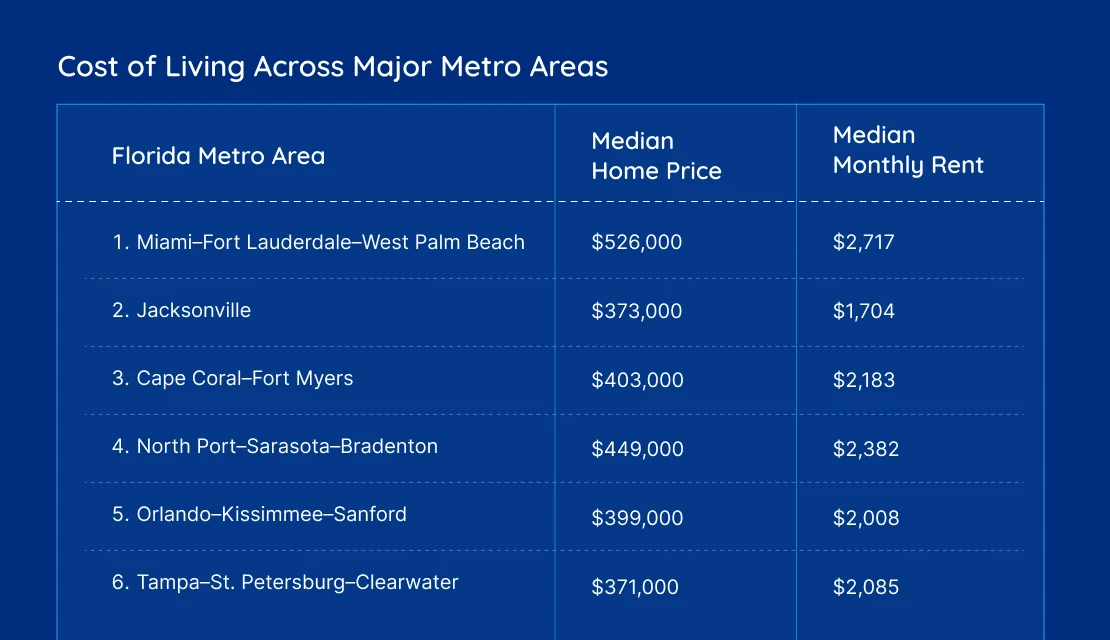
If you are planning to buy a home and settle down here, your costs will largely depend on the metro area you choose. One of the key things to know before moving to Florida is that some markets carry premium price tags, while others remain more budget-friendly.
Here’s how home prices and rent compare across major metro regions in this state, based on a U.S News Report article.
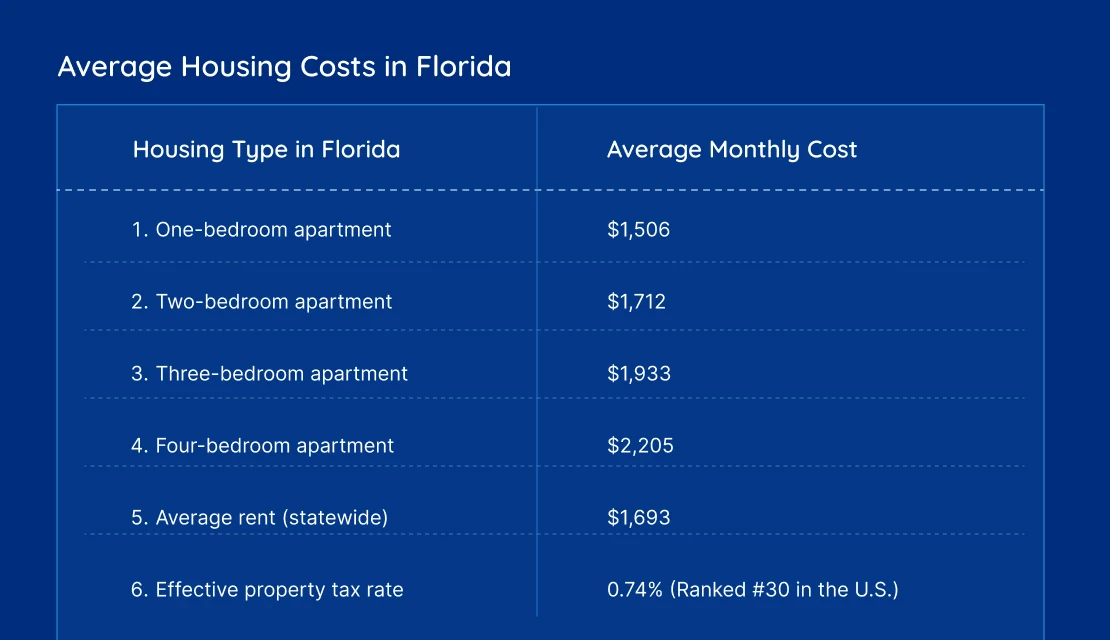
Another data published by Consumer Affairs on housing types in the state
shows how rental costs rise as living space increases. It also reflects statewide average rent levels and the impact of property taxes on overall housing expenses.
If you’re still confused about which city to pick, you can check the U.S. News & World Report Best Places to Live in Florida in 2025–2026 rankings for clearer direction. These lists compare the quality of life, housing, jobs, and community appeal to help you decide where to settle.
Here are some of the top preferred cities from that report:
Yes, Florida is often considered a desirable place to live thanks to its warm climate, lack of state income tax, and varied lifestyle options. Many people enjoy the beaches, outdoor activities, and relatively manageable living costs.
Before relocating to the Sunshine State, it’s smart to save enough to cover three to six months of living expenses, along with your moving costs. For example, if relocation costs are around $5,000 and monthly expenses are about $3,000, having roughly $14,000 to $23,000 set aside can help you settle in comfortably.
Florida’s property taxes are generally lower than the national average. The state’s effective property tax rate is about 0.82%, compared to the U.S. average of 0.90%. On average, homeowners pay around $2,386 per year, though actual amounts vary depending on the county and property value.
Disclaimer: The information in this article is intended to provide guidance on the proper maintenance and care of systems and appliances in the home. Not all the topics mentioned are covered by our home warranty plans. Please review your home warranty contract carefully to understand your coverage.
Our blogs and articles may link to third-party sites that offer products, services, coaches, consultants, and/or experts. Any such link is provided for reference only and not intended as an endorsement or statement that the information provided by the other party is accurate. We are not compensated for any products or services purchased from these third-party links.

Don’t wait until it’s too late! Check out our current plans and get your free quote.
Household Tips
Nothing beats the relief of walking into a cool home on a sweltering day. But did you know that how you maintain air conditioner performance directly affects both your comfort..

Home Warranty
Arizona homes do more than shelter you. They battle dust storms, dry heat, and nonstop wear and tear. And when your refrigerator quits mid-summer or your plumbing gives up after..
Household Tips
If you find your circuit breaker trips often, you’re not alone. Older homes aren’t built to handle families that use many electrical devices plugged in at once. This issue may..