

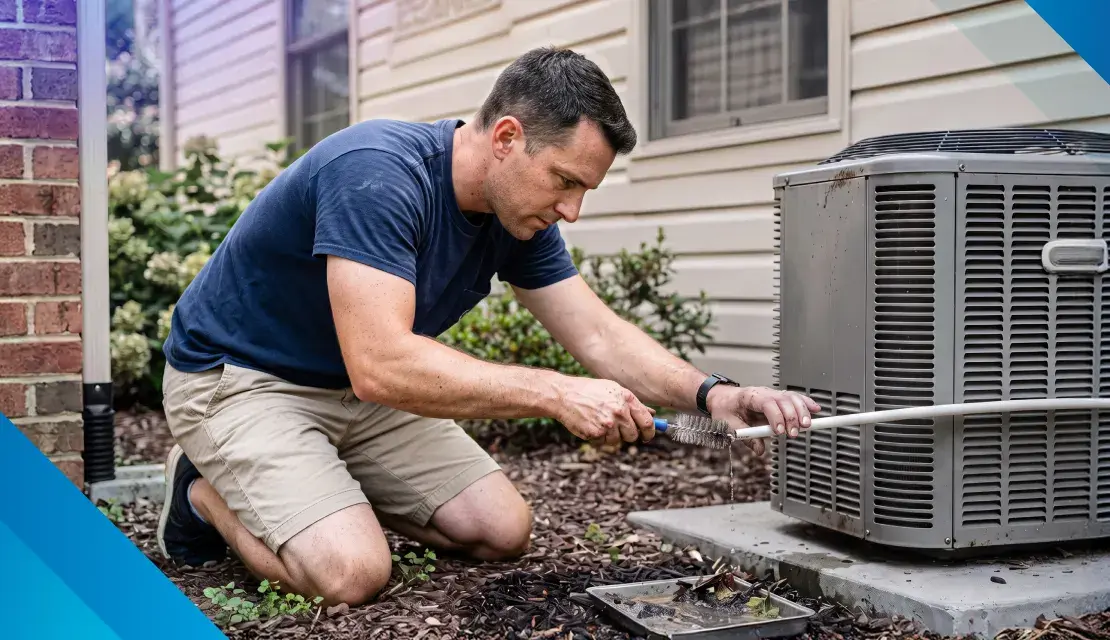
Learning how to unclog AC drain line blockages can save you from water stains, musty odors, and a warm house in the middle of summer. A wet/dry vacuum, some distilled vinegar, and twenty minutes are usually enough to clear it yourself. This guide walks through each DIY step and also helps you understand when a trained technician should take over instead.
This task can be done by using tools most of you already keep at home. None of these steps require special licensing, just some patience, basic safety gear, and about 25 to 30 minutes of your time.
Before you start, gather a few basic supplies so you are not stopping halfway through the job:
Switch off the AC at the thermostat first, then flip the matching breaker in your electrical panel before touching any component. This protects you from shock and keeps the unit from running while water sits trapped inside the line.
This is usually a vertical section of white PVC pipe near the indoor air handler, often located in a closet, attic, basement, or utility room close to the furnace or coil. Look for a T-shaped fitting with a screw-on or push-in cap, sometimes labeled as a cleanout. Older installations may skip this fitting entirely, in which case the nearest joint in the pipe works as a substitute access point.
Now, put on your gloves and shine the flashlight into the opening. Standing water right at the top usually means the blockage sits close to the unit, while a dry opening suggests the clog is further down the line. A strong musty smell at this stage almost always points to algae growth inside the pipe.
The U.S. Environmental Protection Agency (EPA) advises keeping air conditioning drip pans clean and drain lines clear. This routine moisture control helps prevent hidden mold growth inside the home. Regular inspections can help you catch buildup before it develops into a larger problem.
Head outside to find where the drain line exits the house, typically a short PVC pipe near the foundation or close to the outdoor condensing unit. Attach a wet/dry vacuum to this opening, sealing the connection tightly with tape or a damp rag to hold suction. Run the vacuum for two to three minutes and watch for dark sludge, algae clumps, or standing water pulling through into the canister.
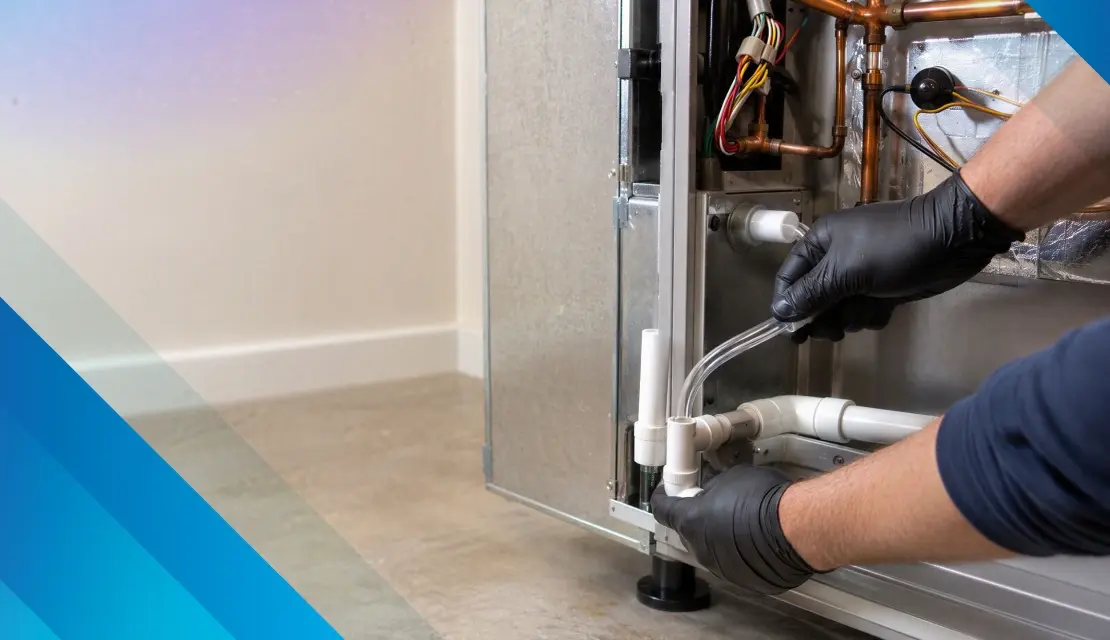
Back at the indoor access point, use your funnel to pour a quarter to a half cup of distilled vinegar directly into the opening. Vinegar is a mild acid that breaks down algae and mineral buildup gradually without corroding PVC piping the way stronger chemicals can. Let it sit undisturbed for about thirty minutes, so it has time to loosen anything the vacuum missed.
Pour a cup of warm water through the same access point and walk back outside to check the termination point. A steady drip or trickle means the line is flowing freely again. If water backs up instead, feed a flexible drain stick or thin snake a short distance into the pipe to break up any remaining debris, then repeat the vacuum step.
ENERGY STAR’s official HVAC maintenance checklist also recommends inspecting the condensate drain regularly. A blocked drain can lead to water damage and higher indoor humidity levels. Confirming proper drainage after cleaning helps ensure your system is operating as intended.
Turn the breaker back on, set the thermostat to cool, and let the AC run for fifteen to twenty minutes. Watch the drain pan for new leaks and keep an eye on the outdoor termination point to confirm water is draining at a normal, steady pace.
Once you know how to unclog AC drain line, checking it every few months becomes a quick maintenance task instead of an emergency repair. Don’t wait until water starts leaking indoors. Regular upkeep helps you catch buildup before it causes trouble.

Learning how to unclog AC drain line yourself solves most clogs, but a few situations call for a trained HVAC technician instead.
Call a licensed HVAC Pro if:
Also, if the repair turns out to be bigger than you expected, you still have options. A comprehensive home warranty coverage can help in these situations by covering eligible HVAC system repairs caused by mechanical failures. Instead of searching for a contractor and paying the full repair bill yourself, you can request service through your warranty provider and let the claim process begin.
That’s what happened to homeowner Tony Ball, who shared on the Trustpilot platform that after his AC malfunctioned, Select Home Warranty quickly helped arrange service. He described the experience as outstanding and even said he would recommend the company to others. While every claim depends on your plan’s terms and coverage, experiences like this show how having protection in place can simplify the repair process when covered systems fail.
For more details on coverage, you can read our blog on: Does a home warranty cover HVAC system repairs?
Some drain line issues point to a bigger problem with the cooling system itself, and repairs on covered components can add up fast without a home warranty in place.
Check HVAC Coverage
Professional AC drain line cleaning typically costs between $147 and $352, with a national average of around $246, according to Angi’s Cost Data 2026. The final cost depends on the severity of the blockage, labor rates, and whether additional HVAC repairs or emergency service are needed. Basic DIY cleaning usually costs much less if the blockage is minor.
An AC drain line usually becomes blocked when algae, mold, dust, dirt, or mineral deposits build up inside the condensate pipe. A dirty air filter can also allow debris to enter the drain pan, while an improperly sloped drain line may prevent water from flowing out correctly. Routine HVAC maintenance helps reduce these problems.
Common signs include water leaking around the indoor unit, musty odors from vents, standing water in the drain pan, water stains on nearby walls or ceilings, higher indoor humidity, or an AC system that shuts off because of the safety float switch. On humid days, little or no water draining from the outdoor condensate pipe may also indicate a blockage.
Distilled white vinegar is one of the best liquids for unclogging an AC drain line. It helps break down algae, mold, and light mineral buildup without damaging the PVC pipe used in most HVAC systems.
For regular maintenance, distilled white vinegar is the safer choice. It helps dissolve algae and organic residue without harming the PVC drain line used in most HVAC systems. Bleach may remove stubborn buildup, but repeated use can damage certain system components and produce strong fumes.

Don’t wait until it’s too late! Check out our current plans and get your free quote.
Household Tips
Bathrooms are naturally prone to moisture buildup, thanks to warm showers, bubble baths, and daily sink use. Your bathroom exhaust fan helps manage it all, keeping the air fresh and..

Home Warranty
The cost to repair home appliances can quickly add up. Is it worth it to fix your old refrigerator, or would buying a new one be cheaper? Knowing the price..

Household Tips
While some things are best left to professionals, there’s plenty you can do to maintain your own HVAC system. Preventative maintenance is one of the best ways to get as..