


Electrical problems can be small at first, then very expensive very fast. A dead outlet, buzzing switch, or failing breaker may look minor, but the repair bill can grow quickly. A home warranty for electrical system coverage can soften the blow when outlets fail, breakers trip, or wiring starts acting up.
In many homes, electrical repair costs without warranty coverage can run from a few hundred dollars to well over a thousand. A warranty can reduce that unexpected cost when the failure is due to normal wear and tear. According to the National Fire Protection Association (NFPA), electrical failures or malfunctions play a major factor in residential fire incidents. They contribute to the ignition of nearly four out of every five (80 percent) of the home fires.
This is one reason wiring problems deserve attention. Home warranties for electrical coverage can help you manage these risks without draining savings. You stay focused on family life instead of the repair stress.
To understand the real value of a home electrical system coverage, it helps to look at how it plays out in everyday situations.
A homeowner from San Antonio, Texas, reached out to our team after a difficult summer experience. In late July, with temperatures pushing past 105°F, their AC circuit failed mid-afternoon, leaving the household without cooling for nearly two days during one of the city’s hottest weeks on record. The electrician traced the problem to a failed dedicated circuit. The repair came to $780, an unplanned expense at the worst possible time.
After getting things sorted, the homeowner started researching home warranty providers in Texas. They wanted coverage for exactly this kind of situation, a mid-season electrical breakdown on a system they rely on daily.
When they connected with us, the numbers were clear. Under a home electrical coverage plan, that $780 repair would have come down to a $75 service fee. So, cost predictability is one of the biggest practical benefits. To sum up, the key advantages homeowners consistently enjoy:
This is the question most homeowners need answered before they sign up for anything. An electrical system protection plan typically addresses the core components that fail most often, the ones that make up the backbone of your home’s power infrastructure.
Commonly covered parts and components:
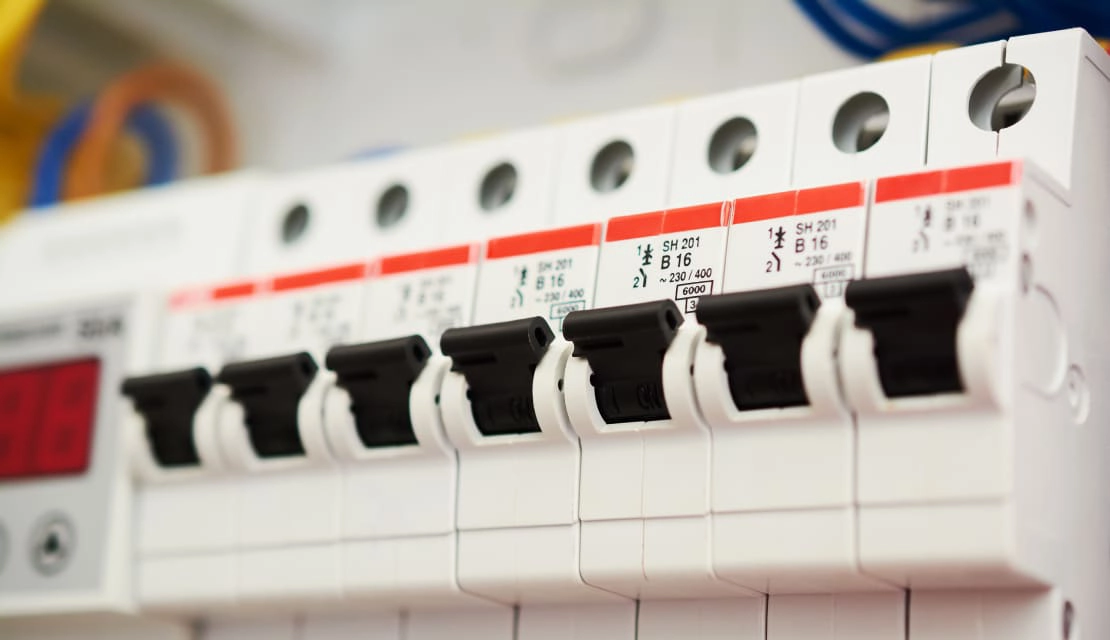
When your main panel starts tripping frequently, or a breaker fails to hold, that’s a panel issue. In fact, many of our customers are unsure about panel replacements and often ask, “Does a home warranty cover electrical panel replacement?” With Select Home Warranty, it often does.
Panel issues are more common than most people realize, many of which trace back to outdated or faulty panels. Since they are among the costliest components to repair or replace, having coverage can ease a significant financial burden.
Do home warranties cover wiring issues? Yes, most plans cover interior wiring that fails due to normal wear and deterioration. This includes wiring inside walls, as long as it was functioning at the time the plan began.
Standard outlets, GFCIs, and light switches that stop working are covered under most home protection plans. A dead outlet in your kitchen or bathroom is a common claim and usually a straightforward fix.
Motor failures in ceiling fans or bathroom exhaust fans typically fall under electrical coverage. If the motor burns out, the warranty company dispatches a technician to assess and address it.
These are the circuits built for high-demand appliances: your washer, dryer, refrigerator, dishwasher. When a dedicated circuit fails, it can knock out an entire appliance’s function, and home warranty plans commonly cover these.
Hardwired fixtures and junction boxes that fail due to age or wear are generally eligible for coverage under an electrical home protection plan.
We have often seen a noticeable spike in electrical service requests during peak summer months, especially in states like Arizona, Texas, and Florida. The constant strain from air conditioners and high appliance usage pushes electrical systems harder than usual.
If you live in high-temperature regions where electrical systems face heavy seasonal demand, it’s worth considering coverage tailored to your location. You can always get the support of a home warranty company in Arizona, Texas, or Florida to explore plans that align with your home’s repair needs.
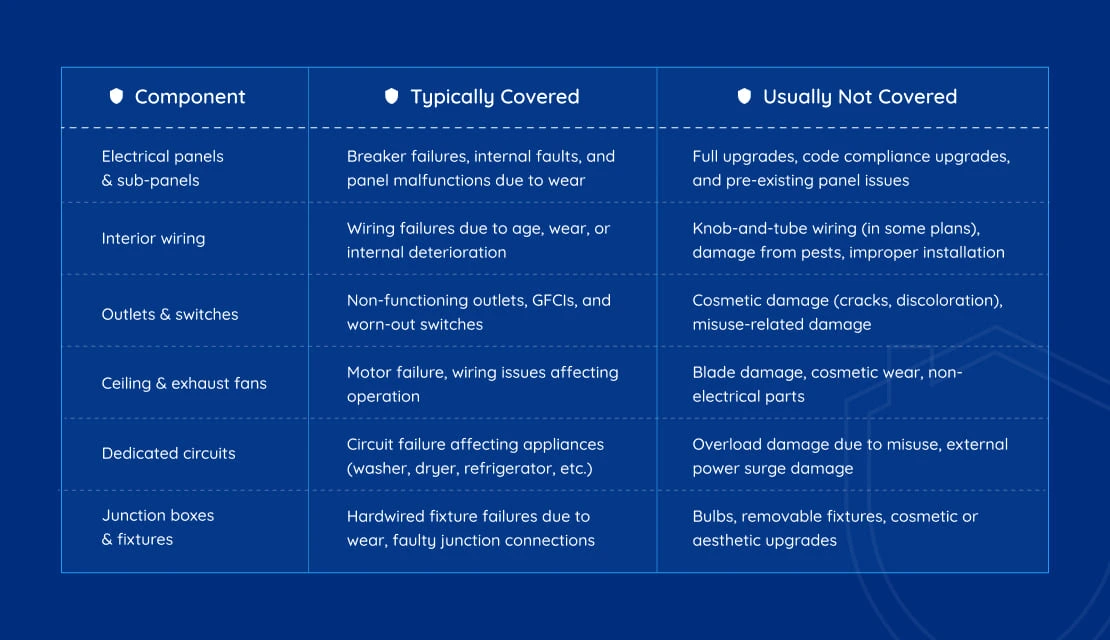
Not all electrical repair coverage plans offer the same level of protection. A quick comparison can help you choose better.

Electrical repairs are unpredictable, often urgent, and rarely cheap. A warranty for electrical system protection gives homeowners a defined, manageable way to handle those costs. The value becomes clearest when you experience more than one claim per year, or when your home is older and more likely to have wiring-related wear.
If you are searching for the best home warranty, Select can be your ideal choice. Our plans provide electrical system coverage that are built around the kinds of repairs.
Most plans include standard outlets and GFCIs, provided the failure is due to normal wear and not external damage.
You may need to pay the amount beyond your plan’s cap. Coverage limits vary, so reviewing them in advance is important.
Yes, most standard plans do not include smart systems unless they are part of basic wiring or fixtures. Advanced systems may require add-ons.
Yes, as long as each issue falls within your plan terms and coverage limits have not been exceeded.

Don’t wait until it’s too late! Check out our current plans and get your free quote.

Household Tips
If your heat suddenly cuts out during a cold night, knowing how to replace a furnace ignitor can save you time and worry. Many homeowners try simple DIY repairs when..

Home Warranty
Owning a mobile home feels like an adventure, doesn’t it? It is a perfect blend of affordability, portability, and a cozy space to call your own - wherever you go...

Household Tips
Is your dryer making strange noises or, worse, refusing to heat up? You’re not alone. Many homeowners experience dryer issues but aren’t sure how to address electric dryer repair. Should..