


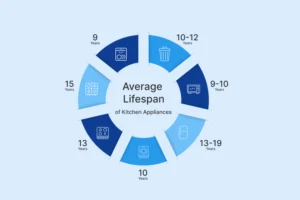
Most kitchen appliances remain reliable for 9 to 15 years, although refrigerators often last longer while microwaves and dishwashers usually reach replacement sooner. Their lifespan depends on build quality, maintenance, usage frequency, and installation conditions.
Modern kitchen appliances are packed with high-tech features, but their lifespans have actually shortened. With increasing household expenses and environmental concerns, it is more important than ever to keep them running efficiently for as long as possible.
But what is the key to making them last? Smart usage and regular maintenance! A few simple habits can add years to your appliances and also save you money. This guide explains how long do kitchen appliances last, what affects their lifespan, practical maintenance tips, and how a home warranty can help reduce repair costs when covered appliances fail.
We all rely on our kitchen appliances, but let’s be honest – we don’t give them much thought until they break down. Whether you have had yours for a few years or over a decade, knowing their average lifespan can help you prepare for repairs or replacements. Don’t worry! If yours are getting up there in age, there are still plenty of ways to keep them going strong for as long as possible.
According to the National Association of Home Builders (NAHB), many major kitchen appliances have expected service lives ranging between 9 and 19 years, depending on appliance type and maintenance practices.
Average Lifespan: 15 Years
A gas stove can handle years of home-cooked meals, typically lasting around 15 years with proper care. This sturdy appliance generally outlives electric models by a few years, thanks to its simple design and mechanism. To keep yours in top shape, clean the burners regularly and make sure no food debris is clogging the ports. A little routine maintenance can help keep it cooking like new for years to come.
Average Lifespan: 13 Years
According to the National Association of Home Builders (NAHB), a well-maintained electric range typically lasts about 13 years. Its longevity depends on factors such as build quality, frequency of use, and regular maintenance. Choosing a high-quality model, using it efficiently, and keeping up with routine care can help maximize its performance and ensure it serves your kitchen for years.
Average Lifespan of Induction Cooktop: 10-11 Years
Average Lifespan of Ceramic Cooktop: 7-10 Years
Induction models typically last longer than ceramic cooktops. With an average repair cost of $280, some fixes are easier than others. Older resistance elements are simple to replace, but electronic modules and induction coils can be costly. If a major repair is needed outside of warranty, upgrading might be the best long-term solution.
Average Lifespan: 9-10 Years
When thinking about “How long do kitchen appliances last?” microwaves are often at the top of the list as a key appliance to pay attention to. Expect a microwave to last about nine to ten years under normal conditions, but heavy use can cut that down to four or five years.
Families who rely on it frequently for quick meals and reheating leftovers may need to replace it sooner. Misuse, like heating non-microwave-safe materials, can lead to irreparable damage, making proper care essential for longevity.
In places like Arizona’s busy metropolitan areas, like Phoenix, Tucson, and Mesa, appliances face heavy daily use, and repairs can be comparatively costly. So, many families turn to a home warranty in Arizona to offset the cost of early replacements.
Average Lifespan: 13-19 Years
A refrigerator’s lifespan varies by type; single-door models are the longest-lasting, while freezer-top units can go up to 17 years, and side-by-side fridges around 14 years. Small repairs, like fixing a gasket or an ice maker, are expected over time. However, if the compressor stops working, it is usually a sign that it is time for a new fridge.
Average Lifespan: 9 Years
A dishwasher can last a long time, but keep in mind that newer, feature-packed models don’t always have a longer lifespan. More features mean more parts that can break. To make the most of your appliance, stick to regular maintenance, like cleaning the filter and taking care of small repairs before they become bigger issues.
Average Lifespan: 10-12 Years
The life of a garbage disposal is mostly influenced by how much it is used. A busy family that prepares home-cooked meals will wear it out faster than someone who eats out often. Simple things like using a strainer and running water while operating it can make a huge difference in extending its life.

If you’re wondering, “How long do kitchen appliances last?” the answer often depends on how well they are maintained. Understanding how your appliances are meant to work and giving them a bit of attention and care can significantly extend their lifespan.
User manuals are a great place to start, as they offer all kinds of tips! While nothing lasts forever, simple upkeep can help get some extra years of use.
Want your gas stove to stick around longer? Try these tips:

Here’s how to care for your electric stove:
To keep your cooktop in great shape, follow these tips:
Make your fridge last longer by:
For a microwave that lasts:
Extend your dishwasher’s life with these simple habits:
Keep your garbage disposal in good condition longer with these habits:
A costly repair isn’t always the best investment. A home warranty can help lower repair expenses and make unexpected breakdowns easier to manage.
Check Appliance Coverage Plans
It’s usually pretty obvious when an appliance needs to be replaced: either it stops working altogether, or the cost of repairs outweighs the price of a new one. Once the warranty expires, it is smart to start thinking about budgeting for a new one.
Sometimes, you may replace an appliance that is still functional just because your style has changed, like swapping a dated fridge for a modern one. You might also choose to replace old models with newer, quieter, and more energy-efficient versions to keep up with rising bills.
Thinking about “How long do kitchen appliances last?” isn’t just about curiosity. This question helps you make the right call when it is time to replace or repair an old appliance. Knowing the average lifespan gives you a better sense of whether investing in a high-end model is worth it or opting for something more affordable.
But even with the best care, no appliance lasts forever. When repairs start piling up, or your energy bills are creeping higher because of an inefficient old appliance, it might be time to consider a replacement.
Whether you are deciding between repairing or replacing, knowing the average lifespan of your appliances helps you make smarter, cost-effective choices. A little knowledge and planning now can save you a lot of headaches (and money) later!
Dishwashers and refrigerators are among the kitchen appliances that require repairs most often. Dishwashers have pumps, spray arms, and electronic controls that wear over time. Refrigerators run continuously, making compressors, fans, and ice makers more susceptible to failure as they age.
A gas stove typically has the longest lifespan among common kitchen appliances, lasting around 15 years or more with proper maintenance. Some high-quality gas ranges can remain reliable for up to 20 years. Refrigerators also have a long service life, averaging 13 to 19 years.
Yes, a refrigerator can last 20 years, but it is uncommon. Most refrigerators last between 13 and 19 years with regular maintenance. Cleaning the condenser coils, maintaining proper temperature settings, and replacing worn door seals can help extend its lifespan.
Yes, a well-maintained stove can last 20 years, especially a gas model. Gas stoves generally outlast electric stoves because they have fewer electronic components. Regular cleaning and timely replacement of worn parts can help extend their service life.
Yes, replacing a 20-year-old stove is often the better choice if it needs frequent repairs or no longer performs efficiently. Older stoves may consume more energy, heat unevenly, and lack modern safety features. If repair costs are high, replacing the appliance is usually the more cost-effective option.
Replace an appliance if repair costs exceed about 50% of its replacement cost or it is near the end of its expected lifespan. Minor repairs on newer appliances are usually worth making.

Don’t wait until it’s too late! Check out our current plans and get your free quote.
Home Warranty
Most homeowners think about their AC or furnace when it comes to comfort, but ductwork is what actually carries that air through your home. It works quietly in the background,..

Household Tips
On chilly mornings, there’s nothing better than stepping onto a heated floor. Many homeowners strive for the day they can install and enjoy these delightful heating fixtures. When your heated..
Home Warranty
Yes, most home warranty plans cover major plumbing issues, including pipe leaks, clogged drains, and worn-out water heaters. Plumbing problems rank among the most common and costly repairs homeowners face,..