


“Eww… is that smell coming from the hot water?”
If you are picking up on a strange water heater smell, something like rotten eggs or a weird burning plastic scent, you are not alone. It is more common than you would think, and it’s definitely not something to ignore.
The truth is that smell is more than just annoying. It can be a sign that something is not right inside your water heater. It might be a chemical reaction taking place or a part that is beginning to fail.
The worst part is that it is not just a smell issue. It also affects the taste of your water, ruins your showers, and messes with your plumbing. It can even cause headaches for sensitive folks in your household. There is also another layer to this. What happens if the issue turns into a major repair or even a replacement need? This is where knowing how a home warranty fits into the picture can help you plan your next step.
But first, let’s get to the root of the problem.
In this blog, we’ll dig into two important things:
What’s causing the smell?
What can you do to fix it?
What water heater issues does a home warranty cover?
The worst part is that it is not just a smell issue. It also affects the taste of your water, ruins your showers, and messes with your plumbing. It can even cause headaches for sensitive folks in your household.
So, let’s get to the root of the problem.
Let’s kick things off with the first one: how the smell found its way into your heater in the first place.
The primary offender for that unpleasant smell is sulfate-reducing bacteria that thrive inside your tank. Another reason is that when the magnesium anode rod starts to corrode, it reacts with the water and produces a strong, musty smell that lingers in your tap water.
Other factors could be adding to that bad odor in your water. Let’s have a detailed look at them one by one.
Here is a bit of simple science to explain what’s going on. Sulfur-reducing bacteria (SRB) feed on sulfur for energy and thrive in low-oxygen environments like deep wells, heaters, and plumbing systems.
As they consume sulfur compounds, they produce hydrogen sulfide gas, which is the stuff that smells like rotten eggs. They are most active when the heater is set too low or hasn’t been used in a while.
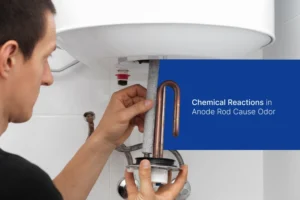
The magnesium anode rod, often called the rust protector, protects your tank by attracting corrosive elements. But there is a trade-off. The process can trigger chemical reactions that release the rotten egg smell. Water softeners can make it worse by eating the rod faster.
That sharp, hot water heater smell could mean something is overheating inside. Loose or worn-out electrical contacts can overheat, melt plastic parts, and leave behind a nasty burnt smell. That smell isn’t just bad; it’s a red flag for an electrical hazard and needs to be addressed immediately.
As the water heats, minerals drop down and settle at the tank’s bottom. Unfortunately, so do bacteria. When this happens, it can give your hot water a weird, musty odor you just can’t ignore. It’s a common issue, especially if you haven’t flushed your tank in a while.
Sometimes, it’s not your water heater to blame; it is the water itself. Contaminants like iron, sulfur, or chlorine in your supply can create strong odors when heated.
Below are the five most effective ways to deal with foul odors in your heater. These are simple, doable, and worth trying before calling in a pro.
Small traces of hydrogen sulfide in your water are no big deal. But once it crosses 1.0 ppm (parts per million), things can get messy. According to the University of Georgia Extension (UGA), that much H₂S can mess with your plumbing and even change how your water tastes. So yeah, it’s worth fixing fast.

How to do it?
If the smell still sticks around, it might be time to seek professional help and call a plumber.
As discussed earlier, the reaction between a magnesium anode rod and your heater’s elements can encourage bacterial growth. Removing the rod entirely isn’t a smart move; you’ll just end up trading one issue (smell) for another (rust).
You could go for aluminum rods. They are easy on the wallet and last longer, though they break down quickly and leave more sediment behind.
For best results, you can try newer anode rod models designed to reduce odor and protect against corrosion. If your unit is older, upgrading to a newer rod type could help keep the stench in check.
If your water heater is more than 8 years old, it’s worth asking: what else might fail soon? A home warranty covers your water heater and most other major systems — so the next repair doesn’t come out of your pocket.
Chlorine probably isn’t the first thing you want in your water. But a one-time chlorination treatment can actually help get rid of that sulfur-like water heater smell for a while.
After adding a bit of chlorine bleach, just run your water until the smell clears. Make sure not to use your water for the next 24 hours because it needs time to do its thing. This trick works for now, but don’t count on it long-term. That smell might be back in a few months, so consider this a temporary fix, not a forever one.
If that awful smell isn’t just coming from your unit but your tap water itself, installing a water softener or filtration unit could help.
These systems won’t strip every impurity out of your water, but they are great at cutting down on odor-causing bacteria.
You’ll also notice smoother skin and shinier hair, plus fewer spots on your dishes and clothes after washing. As a bonus, your pipes and fixtures might stick around longer since there is less mineral buildup wearing them down.
You can start by gently cleaning the exterior of your unit using a damp cloth or sponge. Stick to the outer casing and vents where dust often collects.
Let the unit run for a few days after cleaning. If the odor doesn’t clear up, get in touch with a professional plumber for a deeper inspection.
If you suspect something is off with the wiring or connections in your electric water heater, it is wise to call a licensed technician. They will replace any damaged wires, worn-out switches, or burnt-out parts to get things back to safe operation.
Once the connections are stable and the wiring is safe, the burning smell should completely disappear. You should see your system running clean and odor-free. Since repair requirements can vary across different types of water heaters, understanding your unit’s design can also help you identify potential issues and maintenance needs.
If you have tried every trick in the book and the odor just won’t leave, the last resort would be a full replacement. Your heater might be overdue for retirement.
Fortunately, with a reliable home warranty plan, this doesn’t have to be a costly headache. Homeowners in areas with hard water, like San Diego, often deal with faster wear-and-tear on water heaters. Having a San Diego home warranty in place ensures that when replacement becomes unavoidable, the process is smooth and far less expensive.
Newer systems also run more efficiently and give you cleaner water. So if it’s time, don’t stress! Just check whether your warranty covers water heaters and move forward with filing a claim.
If your water heater starts giving off a strange smell, the cause can range from minor buildup to something deeper inside the system. While some fixes are simple, others point to failing components that need professional attention. In those situations, having a home warranty can change how you handle the repair or replacement.
A home warranty is a service contract that covers repairs or replacement of major home systems when they break down due to normal wear and tear. Water heaters are typically included, which means if the odor is tied to internal damage or aging parts, you have a structured way to get it checked and fixed.
Here are some of the most commonly covered water heater issues:

The mystery behind your water heater smell is likely simpler than it seems. From flushing the tank to checking components, you’ve got practical ways to fix it. Whatever the type of water heater, there is always a solution to tackle the odor issue.
But when the smell won’t quit, a replacement may be on the horizon. Not sure who to turn to? If you are backed by Select Home Warranty, you may already be covered for a full replacement. So, no stress, no sky-high costs – Sounds like a win? It’s time to get rid of that stench and breathe easier with cleaner, fresher water.
This is a clear sign that the problem is inside your water heater, not your pipes. The sulfur smell comes from bacteria that thrive in warm water, reacting with the magnesium anode rod. Cold water passes through before reaching the heater, so it doesn’t pick up the smell. The solution is to target the bacteria inside the tank, either by flushing it, raising the temperature, or replacing the anode rod.
The smell is unpleasant, but the water is generally not harmful for bathing or washing clothes. However, you shouldn’t drink or cook with it until the issue is resolved. If the smell is coming from your well water or municipal supply rather than just the hot water, you may have a broader water quality issue worth testing.
Turn off the power or gas to the heater. Connect a garden hose to the drain valve at the bottom of the tank. Open a hot water faucet somewhere in your home to let air in. Then open the drain valve and let the tank empty fully. Flush with cold water until it runs clear. This removes sediment and bacteria from the tank bottom and often eliminates the smell within a day.
Yes, if the smell is caused by a failing anode rod, heating element, or internal component, a home warranty typically covers those mechanical repairs. It won’t cover issues caused by water quality (like a high-sulfur well water supply), but mechanical wear and tear on the tank is included in most plans.

Don’t wait until it’s too late! Check out our current plans and get your free quote.

Home Warranty
If you’re shopping for a home warranty for the first time, it might feel like there’s a lot to take in. Even for those among us who have owned multiple..

Household Tips
During the summer, we use our appliances a lot. We tend to throw more parties during warm weather, and your home works very hard to keep up. As the summer..

Household Tips
Bathrooms are naturally prone to moisture buildup, thanks to warm showers, bubble baths, and daily sink use. Your bathroom exhaust fan helps manage it all, keeping the air fresh and..