

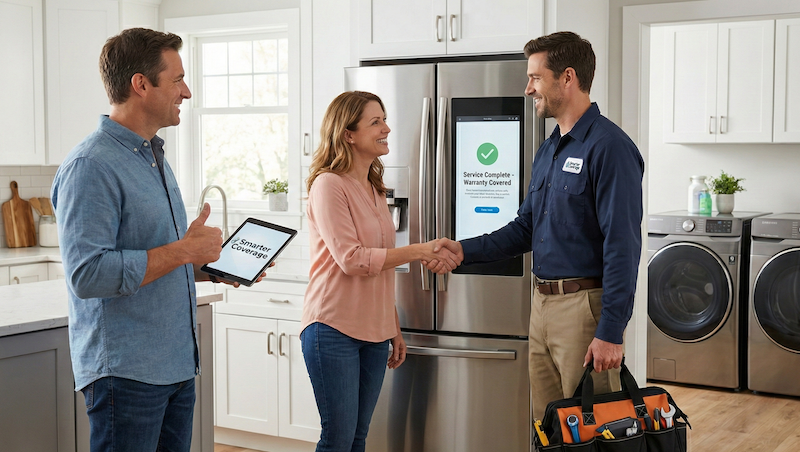
Homeownership in 2026 looks different than it did even a few years ago. Homes are getting older, repair costs remain high, and systems are more complex than ever. From smart thermostats to energy-efficient appliances, today’s homes rely on technology that can be expensive to fix when something breaks.
That is why home warranties continue to play an important role for homeowners who want predictable costs and protection against unexpected repairs. While the home warranty market is growing steadily rather than rapidly, it is evolving to meet the real needs of modern homeowners.
The U.S. home warranty market is projected to grow at a steady pace of roughly 4 to 7 percent annually through the early 2030s. This growth is driven less by home sales and more by the rising cost of maintaining a home.
Many U.S. homes are decades old, and replacing or repairing major systems such as HVAC, plumbing, electrical, or water heaters can cost thousands of dollars. Even as affordability challenges slow homeownership growth for younger buyers, existing homeowners are staying in their homes longer and investing more in protection.
For these homeowners, a home warranty offers a way to manage repair expenses with greater predictability instead of reacting to sudden, high-cost breakdowns.
This trend shows up clearly in established cities like Winston-Salem, North Carolina, where many neighborhoods are filled with mid-century homes whose original HVAC and plumbing systems are well past their expected lifespan. Homeowners there increasingly rely into a Winston-Salem home warranty service to manage that rising repair burden without draining savings on any single breakdown.
In 2026, the most popular home warranty plans continue to fall into two main categories:
Appliances-only plans remain the most common entry point, but comprehensive plans that include major systems are growing faster. Homeowners increasingly want broader coverage, especially for high-cost systems like heating, cooling, and electrical.
Another major shift is expanded coverage for modern home technology. Smart appliances, energy-efficient systems, and eco-friendly upgrades are becoming standard in many homes. Home warranty providers are responding by addressing coverage gaps that previously left newer technologies excluded.
This evolution reflects how homeowners actually live today and what they expect their protection plans to support.
More than half of U.S. home warranty purchases now happen through direct-to-consumer channels. Instead of relying solely on real estate transactions, homeowners research plans online, compare providers, and purchase coverage directly.
With this shift comes higher expectations. Homeowners want:
Online reviews, third-party comparisons, and educational content play a larger role in decision-making than ever before. Providers that prioritize clarity, communication, and ease of use are better positioned to earn long-term trust.
Technology continues to shape the home warranty experience in 2026. Digital claims submission, faster contractor dispatch, and AI-supported customer service tools are becoming standard features.
These tools help reduce delays, improve communication, and create a smoother experience when repairs are needed. Instead of long phone calls and uncertainty, homeowners can expect more streamlined updates and faster resolution.
Looking ahead, smart home monitoring and predictive maintenance are gaining attention. Devices such as leak detectors or smart HVAC sensors can identify issues early, helping prevent major damage and extending the life of covered systems.
This shift positions home warranties not just as repair solutions, but as partners in proactive home maintenance.
Although housing-related costs have stabilized compared to the spikes seen in 2023 and 2024, most homeowners expect maintenance and repair expenses to remain elevated. A home warranty can help manage those costs by offering consistent service fees instead of unpredictable repair bills.
Climate-related risks also play a growing role in homeownership decisions. Extreme heat, storms, power disruptions, and water damage concerns are driving interest in resilient systems and smarter energy management.
Home warranties that align with these realities support homeowners who want protection that fits both current risks and future needs.
Few places illustrate this better than Bismarck, North Dakota, where subzero winters put extreme, sustained stress on furnaces and water lines for months at a time. Many homeowners there choose the reliable home warranty provider in Bismarck specifically to keep heating-system failures from turning into a genuine emergency mid-winter.
In 2026, a home warranty is not just something you buy when selling or purchasing a home. It is a practical tool for homeowners who want:
As homes become more expensive to maintain and more complex to operate, having a reliable home warranty can make everyday homeownership more manageable.
Frequently Asked Questions About Home Warranties in 2026
A home warranty generally covers the repair or replacement of major home systems and appliances that fail due to normal wear and tear. Coverage varies by plan but often includes HVAC, plumbing, electrical systems, kitchen appliances, and laundry appliances.
Learn more: https://www.selecthomewarranty.com/plans
Yes. Older homes often have aging systems that are more likely to break down. A home warranty can help reduce the financial impact of unexpected repairs and provide access to qualified service technicians.
Coverage depends on the plan and provider. Many modern home warranties are expanding coverage to include smart and energy-efficient appliances, helping homeowners protect newer technology.
Most providers allow homeowners to submit claims online or by phone. Once approved, a licensed contractor is dispatched to diagnose and repair the issue, with the homeowner paying a service fee.
See how it works: https://www.selecthomewarranty.com/how-it-works
No. Homeowners insurance covers damage from events like fires, storms, or theft. A home warranty covers breakdowns caused by normal wear and tear of covered systems and appliances.

Don’t wait until it’s too late! Check out our current plans and get your free quote.
Household Tips
Central vacuum systems are becoming more and more popular in homes. The benefits to a central vacuum system are many, but you should keep maintenance in mind, as well. Overall,..

Home Warranty
There is a moment every homeowner eventually faces, and it usually happens at the worst time. The air conditioning stops working in the middle of summer. The refrigerator gives out..
Home Warranty
Owning a home with a well pump gives you more control over your water and helps cut monthly utility costs. But with that independence comes upkeep, and questions like, “Do..