

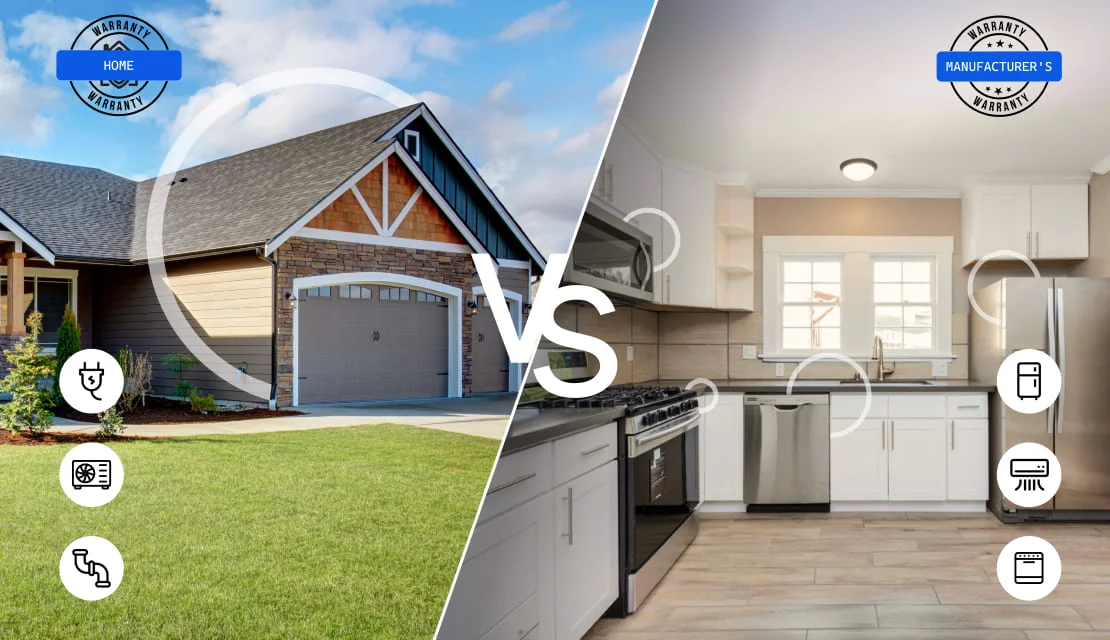
Ever had a major appliance stop working right after its warranty expired? Or wondered if paying extra for extended protection is actually worth it? These are common concerns for homeowners trying to balance repair costs with everyday expenses. Understanding home warranty vs. appliance manufacturer’s warranty before anything breaks can save you a significant amount of stress and money.
Well, the differences aren’t always obvious at first glance. Both offer protection, but they serve very different purposes depending on how long you have owned your appliances and how much coverage you need. They’re not the same thing, and treating them as interchangeable can leave some serious gaps in your home protection.
This guide breaks down how each one works, how they differ, and how to decide which option makes the most sense for your home. Let’s begin!
A home warranty, also known as a home protection plan, is a service contract designed to cover major home systems and appliances. It helps pay for repairs or servicing when these items break down due to normal wear and tear. It typically lasts one year and can be renewed annually, offering broader protection across multiple items in your home. Unlike manufacturer coverage, it is not tied to a specific product or purchase date.
A manufacturer’s warranty is a guarantee provided by the appliance maker at the time of purchase. It typically covers defects in materials or workmanship for a set period, not general wear and tear. It usually lasts 1–2 years from the purchase date and applies only to the specific appliance. Once the term expires, the coverage ends completely, regardless of the appliance’s condition or age.
On the surface, both seem to offer the same thing: protection against repair costs. But the way they work, what they cover, and what they cost are fundamentally different. One is tied to a specific product and timeframe, while the other offers ongoing coverage across several household essentials.
A complete breakdown of the primary differences is explained below to help you see where each option fits.
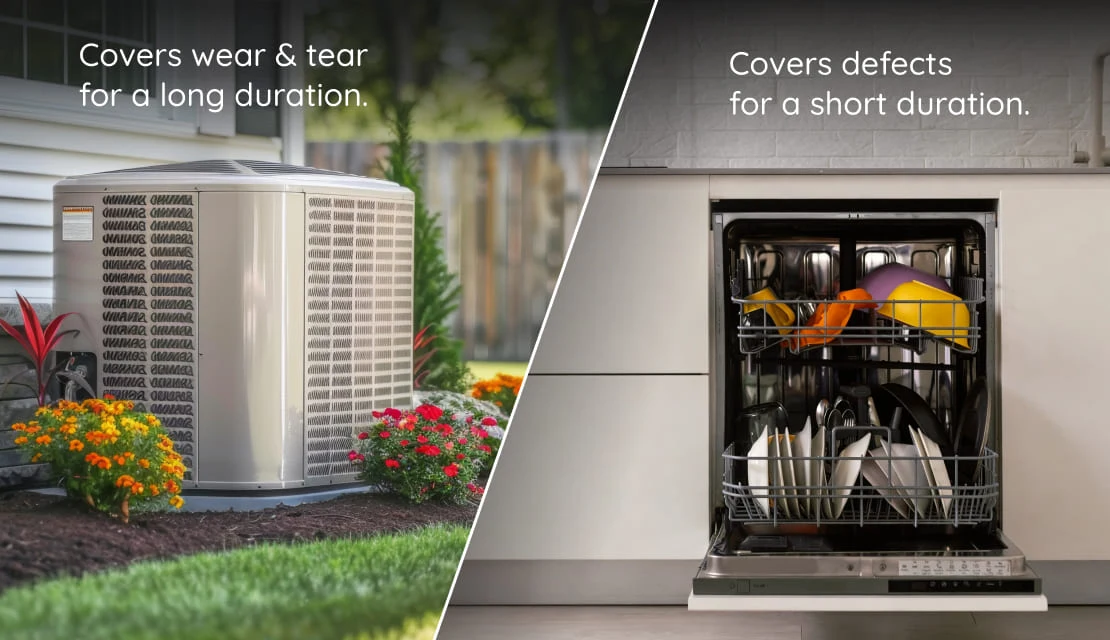
The biggest difference lies in what each type of coverage actually protects.
1. Appliance Manufacturer’s Warranty
A manufacturer’s warranty is built around one thing: the product itself. It covers factory defects, faulty components, and workmanship issues that surface within the defined warranty period. You bought a dishwasher, and if the motor fails due to a manufacturing flaw within the first year, the brand covers it. Straightforward enough.
What it will not cover is any failure caused by regular use. A washing machine drum that wears out after five years of laundry loads is not a defect. That’s wear and tear, and manufacturer warranties explicitly exclude it. They also don’t cover any other appliance or system in your home. Each product stands on its own.
2.Home Warranty
In contrast, home warranties focus on breakdowns caused by everyday usage. It is designed specifically for wear-and-tear breakdowns, the category that manufacturer coverage ignores.
A single plan can cover the following all at once:
If any covered item breaks down from normal use, you submit a service request, and a technician is sent to diagnose and repair it.
As per the 2024 report of The National Association of Home Builders, the typical owner-occupied home has a median age of around 40 years. For aging homes, wear and tear is the primary cause of system and appliance failure, a category that falls entirely outside the scope of manufacturer coverage.
Things to remember here:

When evaluating home warranty vs. manufacturer’s warranty, from a cost standpoint, the structure is quite different.
Manufacturer warranties come at no additional cost; they are built into the price of the appliance. There’s nothing extra to pay as long as the term is active. In some cases, extended warranties are offered at an additional cost, but they still remain limited to that one item.
A home protection plan, on the other hand, involves:
While this may seem like an extra expense, it can provide better value for homeowners with multiple aging appliances or older home systems. The math often leans toward a service contract. In places like Louisiana, where HVAC systems work harder due to extreme temperatures, just one major repair or replacement can cost more than an entire year’s plan. In such situations, you can always turn to a reliable warranty provider in Louisiana to manage these risks more predictably.
Things to remember here:
Another important factor is how repairs are handled.
With a manufacturer’s warranty:
This process can sometimes involve longer wait times, especially if parts need to be ordered or if service providers are limited.
With a home protection plan:
This streamlined process can reduce the time spent coordinating repairs, especially when dealing with multiple appliances or systems.
Things to remember here:
It’s also worth noting that most manufacturer warranties are non-transferable. If you purchase a home with existing appliances, their original warranty likely doesn’t follow them to you. Service contracts, on the other hand, are typically tied to the property and transferable between owners.
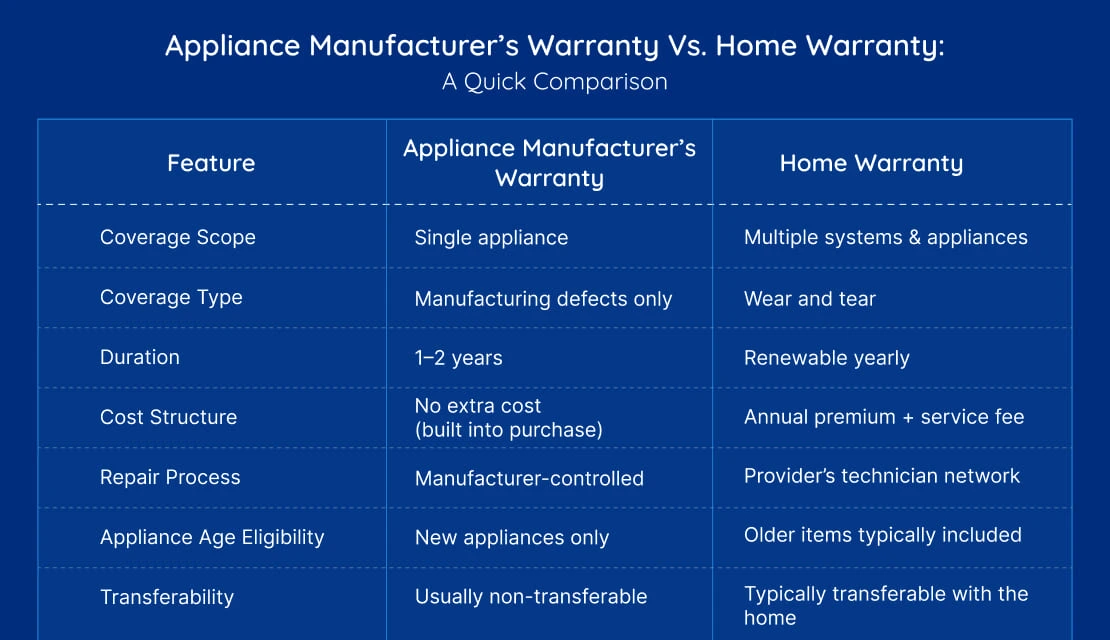
Choosing between these two options depends on your home setup, appliance condition, and how you prefer to handle repair costs.
When comparing home warranty vs. appliance manufacturer’s warranty, it really comes down to timing and coverage needs. The latter does its job well in the early days of ownership, covering defects while your appliance is still new. But once that limited period ends, most homeowners are left covering repair costs on their own, especially for issues caused by everyday use.
But for the longer haul, a home protection service is in a different league. It covers the things manufacturer protection never did, which is normal wear and tear across all your major systems and appliances. And it does so under a single annual plan with managed-service dispatch, rather than forcing you to track individual product warranties for every item in your home.
For homeowners planning to stay in their property and looking for broader, ongoing coverage, a home warranty plan is the more practical and complete option. It often aligns better with real-world usage, where appliances aren’t new, and repairs aren’t always predictable.

Don’t wait until it’s too late! Check out our current plans and get your free quote.

Household Tips
A refrigerator is one of the most important appliances in any home. Unfortunately, when there’s an issue, the price to fix a broken fridge goes beyond basic appliance repair costs...

Home Warranty
You bought a home warranty to avoid surprise repair bills, but then a claim gets denied. That happens more often than you would think, and usually because of a coverage..

Home Warranty
Florida keeps calling your name, doesn't it? The idea of ditching winter gear for flip-flops year-round sounds pretty good. But hold up! There are important things to know before moving..