


A home appliance warranty helps homeowners manage the unexpected costs of repairing covered appliances and systems when they break down.
Congratulations on owning your home! Homeownership brings pride, stability, and… unfortunately, some surprise expenses, too. While you budgeted for the mortgage, property taxes, and insurance, what about the washer that stops mid-cycle or the furnace that gives out in January? A home warranty offers a predictable way to deal with these costs.
These breakdowns aren’t “if” scenarios; they’re “when” scenarios. Understanding home warranties before disaster strikes could mean the difference between a minor inconvenience and a major financial setback.
Let’s take a closer look at home warranties, how they compare to insurance and other warranties, how they work, and what to expect.
A home appliance warranty is a service contract that covers major home systems and appliances. This means it helps pay for repairs or replacements when breakdowns happen due to normal wear and tear. A warranty typically covers essential systems like HVAC, electrical, and plumbing, as well as key appliances such as refrigerators, dishwashers, and washing machines.
The Legal Information Institute of Cornell also defines a home warranty as a service agreement that helps pay for repairs of major home systems. This can include plumbing, electrical wiring, and other key components for a set period after the house is sold. It promises coverage for approved repairs during that term, and you can renew it when the contract ends.
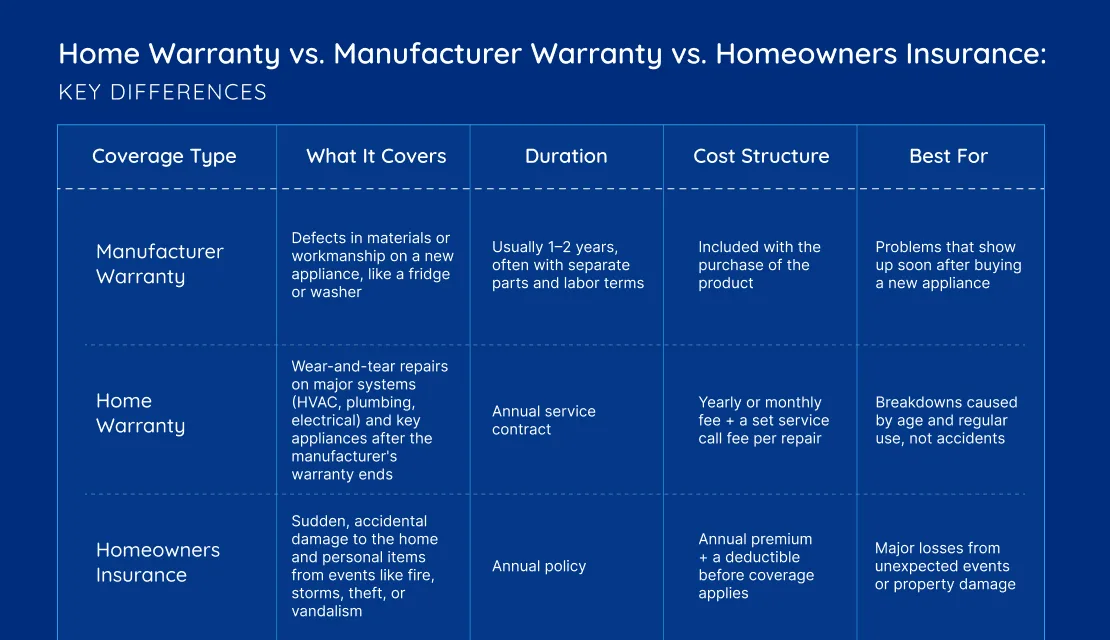
These three types of coverage protect your home in three different ways. The table below makes the differences easy to understand.
Home warranties generally help cover repair costs for major appliances and key home systems. Most providers offer three main types of plans:
Some items may not be included unless you purchase add-on protection. This can apply to things like swimming pools, septic systems, or in-ground sprinklers. When reviewing plans, check that the optional upgrades match what you need.
Every appliance home warranty also has a set coverage limit. If a repair goes beyond that limit, the company pays only up to the allowed amount. You may need to cover the remaining cost to complete the repair.
Now that you know what’s covered, it helps to understand which items actually qualify for a plan.
So, what qualifies for appliance warranty coverage?
Most warranty plans require that your appliances and systems be in good working condition when the plan begins. Age generally doesn’t matter, and you can get coverage as long as they function at the start of the contract.
Many homeowners continue using appliances well beyond their original manufacturer warranty period, especially when they are still functioning properly. In established communities like Columbia, where homes may contain a mix of newer and older appliances, a home warranty in Columbia can help provide protection when covered items eventually break down due to normal wear and tear.
Not every repair falls under a home appliance warranty, especially when damage isn’t from normal use.
Common items and situations not covered include:
To learn further about this detail, check out our blog on Home Warranty Exclusions and Coverage Limits.
Once you understand how a warranty works, it’s easier to decide if an appliance protection plan fits your house and budget. The process is very simple, designed for everyday homeowners. Here’s how a typical warranty for home appliances works, from signup to repair.
The process starts with selecting a plan based on what you want to protect. You can choose coverage for appliances, systems, or both. Pricing depends on coverage type, add-ons, and service fee levels. Quotes are usually quick and don’t require inspections.
A covered appliance or system stops working due to regular use over time. This could include a furnace that no longer heats or a washer leaking from the bottom. The issue must happen after the warranty coverage begins.
When a covered appliance or system stops working, you submit a claim online or by phone. Most companies allow claims 24/7. Once approved, the warranty provider assigns a technician from its service network.
The technician visits your home, inspects the issue, and performs the repair if covered. If repair isn’t possible, the company may approve a replacement. Coverage limits apply per item or per year. You just pay the service fee to the technician once the repair is done.
For a step-by-step look at the claim and repair process, you can also read our blog, “How do home warranties work?”
Appliances and systems don’t usually fail on a schedule. A home appliance warranty helps make those moments easier to handle with planned support and clearer costs.

Key benefits include:
Get home warranty protection that can help you manage eligible repair costs for the appliances and systems you rely on every day.
Home warranty prices depend on the provider, your location, and the level of coverage you choose. Most warranties include a recurring premium and a service fee paid when a technician visits your home. Plans that offer both systems and appliances coverage usually cost more than appliance-only options. Adding coverage for specific items can also affect the total cost.
Typical Cost Structure Breakdown:
Plan premium: You pay a recurring fee to keep your coverage active. This amount varies based on the provider and plan type, such as a monthly or annual plan.
Service call fee: A service fee is paid each time a technician is sent to your home. This applies regardless of the repair size.
An appliance warranty can be a practical choice for homeowners who want more predictable repair costs and fewer surprises when essential appliances break down.
Unexpected appliance failures can happen at any time, and repair bills can add up quickly. These scenarios highlight why many homeowners consider an appliance warranty to help manage repair costs and reduce financial surprises.
Choosing the right appliance warranty provider starts with knowing what to look for. Consider the factors below to ensure you select a plan that meets your home’s needs and expectations.
In a nutshell, before signing a contract, take your time to compare coverage limits, service fees, and exclusions upfront. These can prevent surprises later when a repair is needed.

A dependable appliance home warranty can help homeowners manage repairs with more confidence and fewer surprises. It provides a structured approach to handling common appliance and system failures that occur during everyday use.
However, before choosing a plan, it’s important to review coverage details, exclusions, service fees, and provider reliability. Knowing what qualifies and how claims are handled sets clear expectations from the start.
With the right appliance warranty in place, homeowners can focus more on enjoying their space and less on worrying about unexpected breakdowns.
The best home appliance warranty is one that covers the appliances you rely on most, offers clear limits and exclusions, and provides reliable and fast access to qualified service technicians.
Yes, home warranties for appliances can be worth it for homeowners who want more predictable costs when covered appliances break down from normal wear and tear.
The best time to buy a home appliance warranty is before an appliance breaks down. Pre-existing problems are generally not covered once the plan begins.
Disclaimer: The information in this article is intended to provide guidance on the proper maintenance and care of systems and appliances in the home. Not all the topics mentioned are covered by our home warranty plans. Please review your home warranty contract carefully to understand your coverage.
Our blogs and articles may link to third-party sites that offer products, services, coaches, consultants, and/or experts. Any such link is provided for reference only and not intended as an endorsement or statement that the information provided by the other party is accurate. We are not compensated for any products or services purchased from these third-party links.

Don’t wait until it’s too late! Check out our current plans and get your free quote.
Household Tips
Laundry day gets annoying fast when the dryer won’t behave. If your dryer timer not working the way it should, cycles may stall, run too long, or stop at random...

Home Warranty
Confusion often arises when comparing Homeowners Insurance Vs Home Warranty and their unique benefits. It’s not uncommon for people to ask whether a home warranty’s worth it, especially if you..

Home Warranty
Your appliances work hard around the clock. They need maintainance at certain times, but does this mean you should purchase a home warranty at certain times, too? Whether you’ve been..