


Heating problems do not arrive evenly throughout the year. Breakdowns hit hardest in January, yet home warranty claims data shows a 26.5x seasonal swing from summer lows. October offers the perfect window for proactive service before technicians book solid. This indicates a sharp seasonal pattern for heating systems. January records the highest claim activity, while July sits at the lowest point.
This blog breaks down why heating systems see such dramatic seasonal demand. It also covers what homeowners can do in October to avoid January emergencies and how home warranty coverage protects your heating system.
The 26.5x seasonal swing may look surprising at first. But think about how your heating system behaves when winter arrives. It works harder, runs longer, and has less downtime between cycles. That extra workload can expose problems that stayed hidden during warmer months. By January, even a small heating issue can become difficult to ignore when your home depends on the system every day.
Your furnace may seem perfectly fine when temperatures are mild. Once the weather turns cold, longer heating cycles can reveal parts that have already experienced wear.
You may notice:
None of these signs automatically points to a major breakdown. They are simply reasons to have the system checked before winter demand reaches its peak.

A quick look at the coverage details now beats finding out the hard way during a January emergency call.
Explore Our Warranty Plans
Your heating system runs more in July compared with January. In summer, your furnace may sit unused for weeks. In winter, it can run several times throughout the day. That repeated use puts more operating time on components, motors, controls, and other parts. Existing wear can become noticeable once the system is working harder for longer periods.
The result is simple: a problem that stayed quiet during warmer months may surface after weeks of heavy use.
A slightly uneven room may not bother you much in October. A furnace that takes longer to start may also seem manageable when outdoor temperatures are comfortable. January changes the situation. When temperatures drop, your heating system becomes essential to everyday comfort. Weak airflow, inconsistent heating, or repeated cycling suddenly become much more noticeable. That can turn a problem you could monitor in the fall into a service call during the winter peak.
What Typically Fails First In Your Heating System
A heating system has several components that can develop problems after months of limited use. When winter arrives and the system starts working regularly, these weak points can become easier to notice.
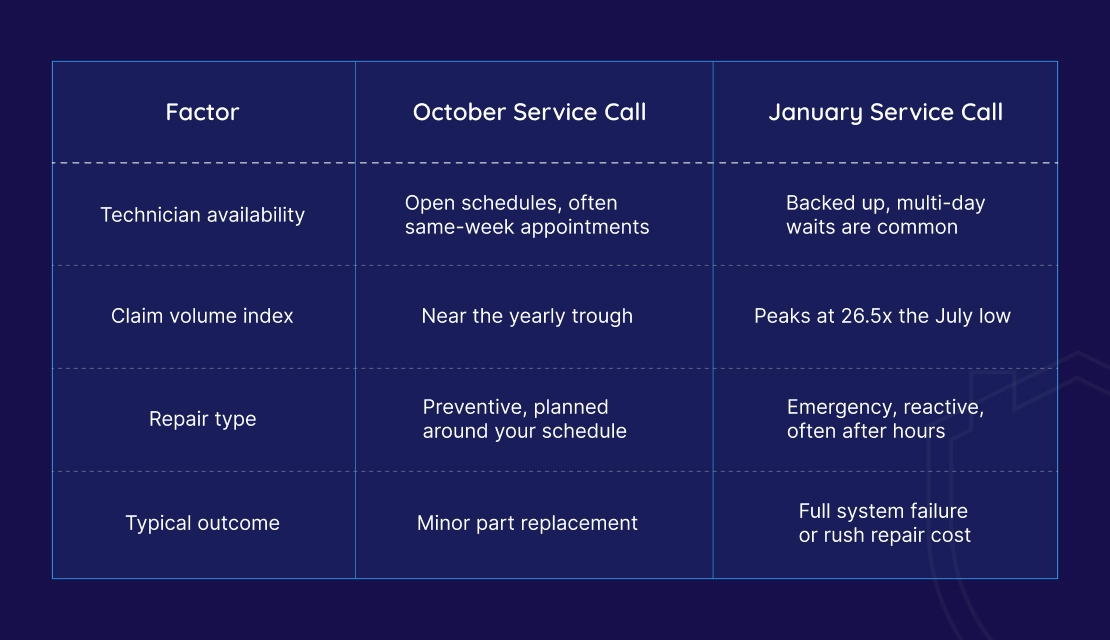
October sits right in the gap between the July trough and the January peak, and that position is exactly what makes it valuable. Claim volume is still low, technicians are still available, and any issue found now is still a minor one.
Once the calendar turns to December, that window closes fast. The table below lays out the difference between booking a service call in each month.
Aging housing stock adds another layer to this pattern. Heating systems installed before 2000 often run past their expected service life, and older ductwork places extra strain on units that are already working harder than they should.
If your property falls into that category, a fall inspection matters even more. Our guide on home warranty for older homes walks through how coverage adapts to aging systems and where older homes tend to see the most claims.

The heating claims tell a clearer seasonal story than almost any other category in home warranty coverage. The 26.5x swing between July and January is not a coincidence. It reflects six months of a furnace sitting untouched, followed by a sudden test the moment temperatures drop across an entire region at once. October gives you a window where technicians are available and small issues are still small.
As a top home warranty provider, we built our coverage around this kind of predictable seasonal pattern, so homeowners have a plan in place before the rush ever starts. Furnace problems rarely wait for a convenient moment, and neither does the wear that builds up over a hot summer. Booking service in October means avoiding the rush that hits every homeowner in your area once January arrives.
It also means catching small part failures before they turn into full system replacements down a cold winter road. If you’re ready to prepare ahead, our budget-friendly home warranty plans make it simple to get heating coverage in place before the season changes.
A furnace should generally receive professional maintenance at least once a year. Fall is a practical time to schedule it before regular winter use begins.
Common signs include unusual noises, weak airflow, uneven heating, frequent cycling, unusual odors, and difficulty maintaining the thermostat setting.
Yes, a home warranty may include eligible older heating systems, depending on the plan agreement and the system’s condition. Check your contract before relying on coverage for a specific repair.
Yes, home warranty plans may include eligible repairs of heating and cooling systems. The specific equipment, components, and situations considered for service depend on the applicable plan agreement.
No, furnace maintenance and furnace breakdown coverage are different things. A warranty may address eligible repairs or service, while routine maintenance generally remains the homeowner’s responsibility.

Don’t wait until it’s too late! Check out our current plans and get your free quote.

Home Warranty
Key Takeaways: Prepaid costs are upfront payments for future bills like property taxes, insurance, and daily mortgage interest. The total prepaid amount depends on your loan type, insurance rates, property..

Household Tips
Your roof is your home’s first line of defense against harsh weather conditions, like heavy rain and strong winds. However, over time, this exposure takes a toll, and even the..
Home Warranty
When something in your home breaks down, the first question is usually simple: Is it covered by home warranties? Whether it’s a malfunctioning HVAC unit or a broken dishwasher, understanding..