


Your AC dies during a summer heatwave, and the repair bill hits $1,200. Moments like these make homeowners wonder whether a home warranty could have helped. Well, the answer is yes. But first, you have to understand the most crucial question: how do home warranties work? Once you know that, it becomes clear why so many homeowners rely on them.
Think of it as a safety net protecting your wallet from unexpected repair costs, typically for a low monthly fee and service call charge. This blog will discuss this in detail, so you can get an idea of how worthy it is to invest.
A home warranty is a service contract that helps cover the repair or replacement of major systems and appliances when they break down from normal wear and tear. Instead of paying the full cost yourself, the warranty provider sends a qualified technician and handles most of the expense, making routine breakdowns easier to manage.
For many homeowners, a warranty becomes valuable the moment something important stops working. It fills the gap that homeowners’ insurance doesn’t, covering normal wear and tear. That extra layer of protection is why many homeowners keep it in place year-round.
If you’ve never used a home warranty before, you might wonder how do home warranties work in real-life situations. The process may seem unfamiliar at first, but once you understand each step, it becomes simple. To qualify for a warranty, your home’s appliances and systems must be in working condition when you sign the contract, regardless of age. Now, let’s see how it works:
The first step is picking a plan that matches your home’s needs. Some homeowners prefer appliance-only coverage, while others choose broader system protection. Review what each plan includes and consider the age and condition of your home’s essentials. You can usually add optional items if you want extra protection for things like pools or secondary appliances.
Next, request a quote either online or over the phone. The company will ask a few basic questions about your house and the type of home warranty coverage you want. The quote explains monthly or annual pricing, service fees, and coverage caps. After you buy a plan, coverage usually begins about 30 days after your first monthly payment.
When a covered item breaks from normal wear and tear, you file a claim with your home warranty company. Most providers offer quick online claim forms, though phone requests are also available. The company reviews your request to confirm eligibility under your plan. Once approved, the claim moves to technician scheduling for an in-home visit.
After your claim is processed, a local, experienced technician is assigned for the job. The technician visits your residence to inspect the appliance or system and determine whether it needs repair or replacement. If the issue is minor and the required parts are available, the technician can often complete the repair on the spot.
You’ll have to pay a service fee to the technician on the day of their visit, as listed in your contract. The remaining approved cost is handled by the warranty provider according to your coverage terms.
If a replacement is needed, the company follows its policy guidelines to supply or credit the new item. After that, your appliance or system is restored and ready to use.
Before we go deeper, it helps to know how do home warranties work in terms of coverage. Understanding what’s included (and what’s not) avoids confusion when filing a claim.
Home warranties, at first, can feel pretty straightforward, until a claim is filed. Some breakdowns qualify for repair, while others don’t because of timing, condition, or exclusions. This quick breakdown helps you understand what’s included and what’s not, before surprises come into play.
Home warranty coverage depends on the type of plan you choose. Most companies offer three main plan categories: system plans, appliance plans, and combination plans. You can also customize your plan with add-ons based on your home’s needs.
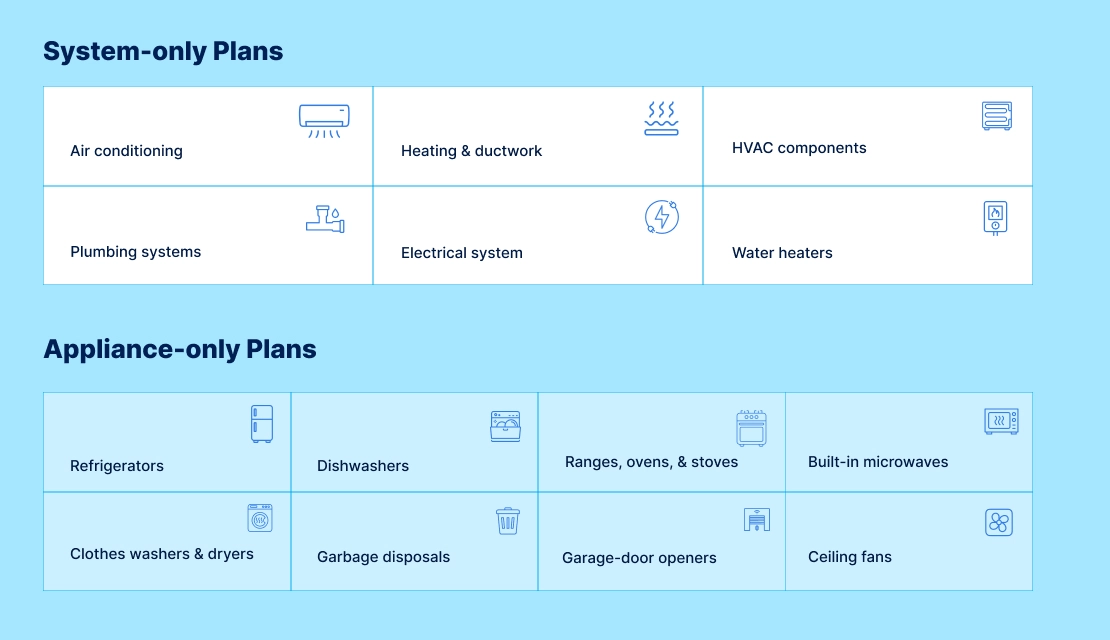
These plans include everything in both system and appliance plans.
Many home warranty providers also offer optional add-ons such as:
Home warranties typically do not cover:
If you’re still asking yourself how do home warranties work and whether they’re worth it for your situation, here are a few scenarios where homeowners find them valuable.
Scenario 1: Older Homes or Aging Appliances
If your home is a bit older, or the appliances are showing their age, a homeowner’s warranty can help you avoid surprise repair bills as things naturally wear out.
Scenario 2: When you are a First-Time Homeowner
If you are new to homeownership, a warranty adds an extra layer of support while you’re still figuring out the cost of repairs, replacements, and general upkeep.
Scenario 3: When you are Selling or Buying a Home
Sellers use home warranties to make their listing more appealing, and buyers appreciate knowing they won’t face repair costs right after moving in.
Scenario 4: Heavy Appliance Use or Risk Management
If your household runs appliances nonstop, has a large family, cooks often, or goes through loads of laundry, those appliances take a beating. A warranty can help manage the repair risks that come with constant use.
To find a home warranty company that actually fits your needs, start by comparing what each provider offers, how much they charge, and how they handle repairs. A quick look at the contract can also save you from surprises later, especially around limits, claims, and technician rules.
Homeowners often choose Select Home Warranty for its timely response to service requests and simple, transparent plan structure. Our approach to repair coordination and customer care contributes to strong overall satisfaction. Want to see your coverage options? Get a quote today.
Breakdowns happen, but a home warranty makes them easier to deal with. Instead of scrambling for repair costs, you file a claim and let the company coordinate the fix. The process is also very simple. You have to choose a plan based on your household’s needs and file a claim whenever an issue arises with covered items. A pro is assigned by your provider who handles the fix. It’s that easy and quick! Just knowing what’s covered, what’s not, and how each company operates helps you choose the right fit.

Don’t wait until it’s too late! Check out our current plans and get your free quote.

Household Tips
Ever look around your place and wonder how it got this messy? Yeah, same. If you are searching for the ultimate house deep cleaning checklist, you are in the right..

Home Warranty
Home warranties provide protection against the costs of repairing or replacing a home’s major appliances and systems. Many times during the sale of a home, the new owners may inherit..

Household Tips
Ever notice your windows fogging up or that stubborn? Or a musty, damp smell lingering in certain rooms? High humidity might be the reason, and your home might be trying..