

When outdoor temperatures climb past 95 degrees for several days, the breakdown risk rises for heavily used home systems. Air conditioners run longer, refrigerators work harder, and other cooling equipment faces sustained demand.
Home warranty claims data shows a similar pattern. A/C and cooling claims peak in June at 17.7 times the daily claim rate seen in January. Ceiling fan claims jump 29 percent, while ice maker claims rise 11.6 percent and refrigerator claims rise 5.5 percent during heat events.
But these numbers do not tell the whole story. The 29 percent jump in ceiling fan claims does not mean heat suddenly damaged 29 percent more fans. Many homeowners only discover the problem when they switch on a fan that has been sitting unused for months.
This points to a common problem: homeowners often discover equipment failures after a heat wave starts, rather than testing their systems beforehand. At the same time, rising refrigerator and ice maker claims point toward genuine thermal stress as equipment works harder in extreme heat.
The distinction between discovery and failure helps explain whether a heat wave caused a breakdown or simply exposed an existing weakness. It also helps homeowners plan maintenance, estimate repair costs, and understand possible home warranty coverage. To understand the difference, we need to look at how different home systems respond to sustained heat.
Extreme heat can create genuine thermal stress when equipment runs longer and works harder. Cooling equipment provides the strongest example in the claims data. A/C and cooling repair claims peak in June, compared with January’s seasonal trough. That large seasonal swing reflects how heavily cooling systems operate during hotter months. Other appliances impacted by heat include refrigerators and ice makers.
1.A/C Systems carry the heaviest summer load
For A/C and cooling claims, the peak month (June) saw 17.7 times more claims per day than the trough month (January) in 2025. Air conditioners run longer and more frequently as outdoor temperatures rise. Extended cycles increase operating hours across motors, electrical components, compressors, and other parts.
Existing wear can become more apparent during sustained cooling demand. A component that worked intermittently during mild weather may struggle under prolonged operation. The data does not prove that every summer A/C failure was caused by heat. But it does show that cooling equipment experiences its strongest seasonal demand during summer. This makes early testing especially useful before a heat wave arrives.
2. Refrigerators face real thermal stress
Refrigerator claims increased by 5.5% during heat events. Refrigerators also recorded a 1.6x peak-to-trough seasonal ratio. Warmer intake water and higher kitchen temperatures force compressors to run longer to hold set temperatures, and that added cycle time is exactly what claims data captures.
High usage can expose weaknesses in components already showing signs of wear. Poor airflow, dirty coils, damaged seals, or struggling components can become more noticeable during hotter periods. A refrigerator that seems fine today may still show warning signs before a major heat event.
3. Ice makers show another genuine stress pattern
Ice maker claims increased by 11.6%, making them another notable heat-related category. Hot weather often increases household demand for ice. The appliance may therefore operate more frequently during periods when the surrounding environment is also warmer.
That combination creates greater workload during a period of higher thermal demand. An ice maker with an existing weakness may begin producing less ice or stop working completely.
So, the common thread across genuine thermal-stress failures is sustained demand. A system already operating close to its limit on a normal day has little capacity left when temperatures rise. The added strain becomes even greater when high outdoor and indoor temperatures persist for a week or more.
Explore our home warranty HVAC coverage built to help offset repair costs when systems like these give out mid-summer.
Get HVAC Protection Now
Not every claim spike during a heat wave points to heat-caused damage. Ceiling fan claims rise 29 percent in these periods, and that number tells a different story than the AC and refrigerator data above.
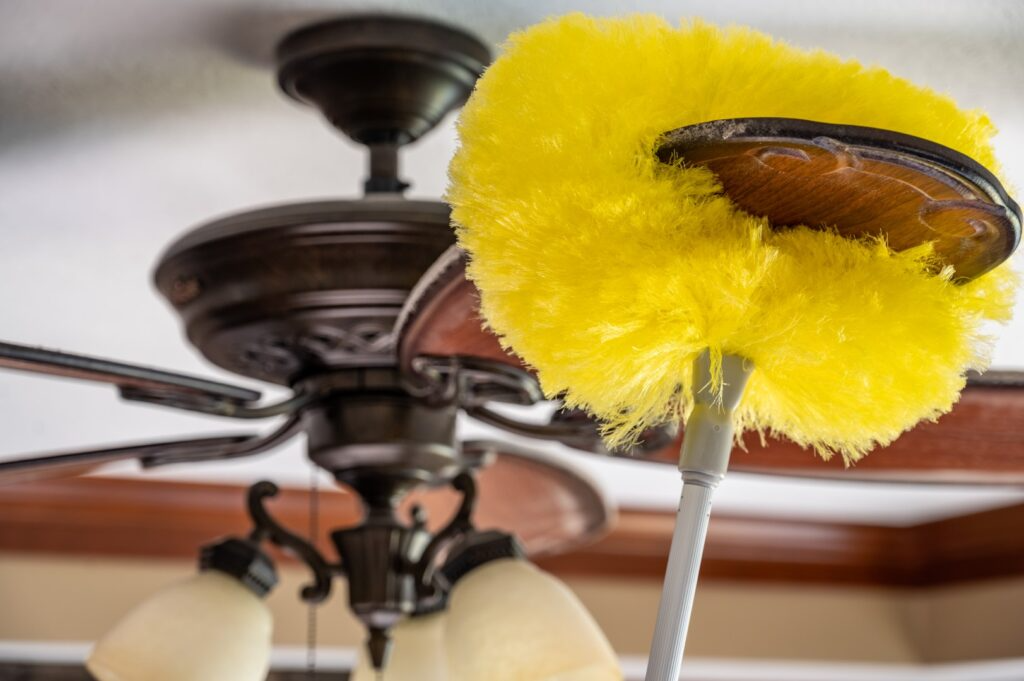
At first glance, that number may look like evidence of widespread heat-related fan failures. The behavior behind the claims suggests a different explanation. Many homeowners switch on ceiling fans after months of disuse. The first hot day creates a reason to test equipment that has remained untouched since the previous cooling season. If the fan does not start, the homeowner discovers an existing problem.
The ceiling fan pattern is a useful example of discovery versus failure. A motor, capacitor, wiring connection, or control may have developed a problem earlier. The homeowner may never notice because the fan is rarely used during cooler months.
The heat wave changes the situation by making the fan necessary again. The seasonal data supports this pattern. Ceiling fan claims reach a 2.4x peak-to-trough ratio, with May showing the highest activity.
This does not establish that hot weather physically damaged those fans. Instead, it suggests that seasonal use can uncover failures that were already present. The distinction is important when evaluating repair trends.
If you already have a home warranty, you may wonder, “Will it cover the breakdown if my system fails during a heat wave?” To answer this, yes, repairs are covered, as long as the failed part or component is included in your plan agreement.
The key point is simple: a heat wave does not automatically exclude a repair from home warranty coverage. If a covered component fails during a period of extreme heat, the repair may qualify under your plan.
Repair prices vary by location, the specific component involved, equipment age, and local labor rates. Here’s what each system typically costs to fix out of pocket.
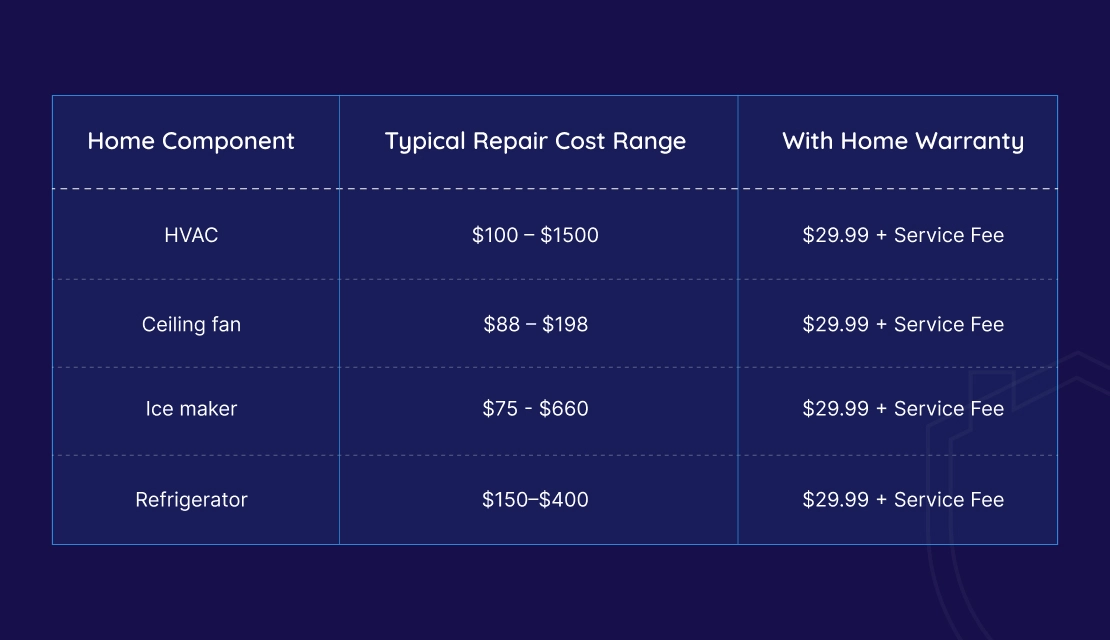
A standard home warranty plan starts around $29.99 a month, plus a $75 to $100 service call fee per technician visit when a covered breakdown happens.
The numbers make the choice easier to see. When a single repair can cost hundreds or even thousands of dollars, paying for every breakdown separately can quickly strain your budget. A home warranty gives you a more predictable way to manage eligible repair costs, especially when extreme heat puts multiple systems under pressure.
Testing these systems before the next heat wave helps you catch failures while they are still simple, low-cost repairs. Use this checklist before temperatures climb sharply:
Heat can put your AC, refrigerator, ice maker, and other home systems under heavy demand. Choose a home warranty plan that helps cover eligible repairs and get protection in place before the next heat wave.
Get a Free Quote
Yes, a heat wave can cause an AC to break down by forcing it to run for longer periods under heavy demand. This sustained workload can stress aging components such as capacitors, motors, and compressors, leading to a breakdown.
Yes, getting a home warranty before a heat wave can protect your budget from high repair costs. It provides coverage for breakdowns of your home systems and appliances during periods of high demand.
Yes, home warranty plans offer coverage options for specific systems, including HVAC, refrigerator, and ceiling fan. You can check out our Platinum Care Plan for complete protection of these home essentials.
No, heat-wave demand does not automatically add a seasonal surcharge to your home warranty service. You generally pay the service fee listed in your plan when you request service for a covered breakdown.
Yes, a built-in ice maker is often covered when the refrigerator is covered under your home warranty plan. Standalone or freestanding ice makers may require separate coverage or an optional add-on.

Don’t wait until it’s too late! Check out our current plans and get your free quote.
Household Tips
Overhead fans are a staple fixture in most homes and a great way to keep your home’s temperature regulated. Of course, a clean and well-maintained ceiling fan works wonders for..

Household Tips
You probably change your HVAC filter once in a while. But have you ever looked deeper, literally? Knowing how to clean HVAC systems not only helps prevent breakdowns. It also..

Real Estate
2021 is the year of new homeowners! Saving up, shopping around and bidding for a home can be a time consuming and stressful ordeal, but the payoff is your own..