

January brings a familiar challenge for homeowners. The heating system works harder, plumbing faces colder conditions, and water heaters handle increased demand. Problems that went unnoticed during warmer months can suddenly become difficult to ignore.
Our claims data at Select Home Warranty shows a clear seasonal pattern. Heating systems, plumbing systems, and water heaters all record their highest service-call activity in January. These overlapping peaks point to a common factor: winter puts several essential home systems under pressure at once.
But what connects these breakdowns? In this post, we walk through why that happens, what it tells us about deferred maintenance, and what you can do the moment one of these systems quits. We have seen how these calls unfold, and we want you ready before the next cold snap.
Cold does two things to your home. It stresses the systems built to fight it, and it puts you in contact with systems you barely thought about in July. When both happen at once, calls pile up. Here is how our home warranty claims data lays it out.
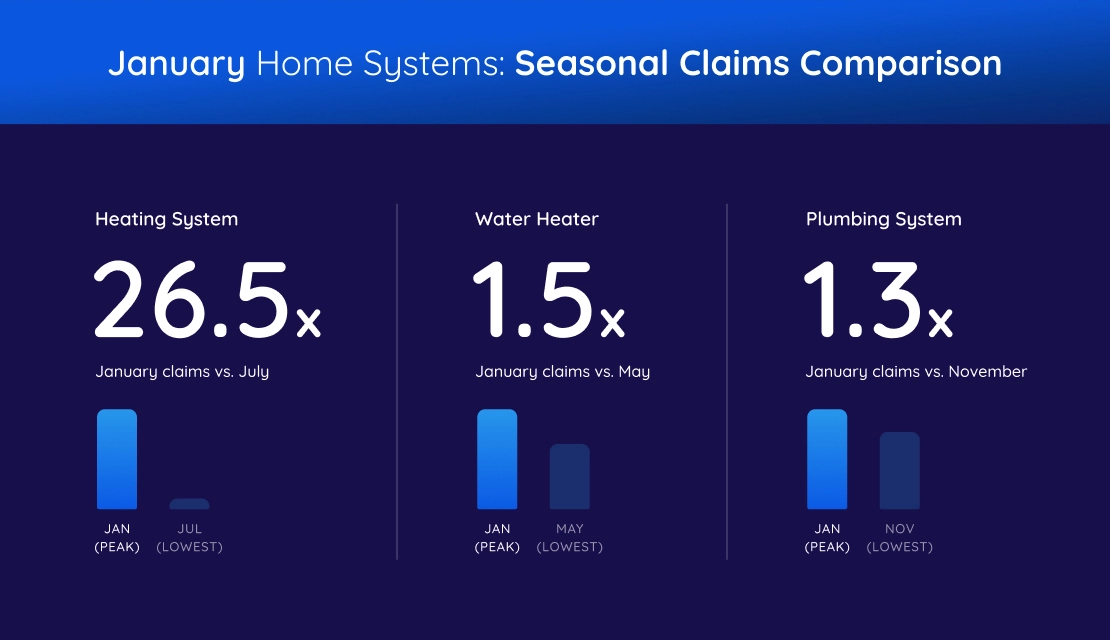
The pattern makes sense when you consider how your home responds to winter. Colder weather increases heating demand, changes plumbing conditions, and makes reliable hot water more important.
Let’s examine what happens to each system.
Your heating system may remain inactive or operate occasionally during warmer months. January changes that routine, and colder outdoor temperatures mean longer heating cycles and more frequent operation. This sustained demand can expose existing weaknesses in components that were already showing signs of wear.
Some common trouble spots include:
A heating system that seemed functional during occasional use may struggle under sustained demand. Watch for unusual noises, inconsistent warmth, or repeated cycling. You can also learn more about how your heating and cooling systems can benefit from warranty protection in our guide to home warranty HVAC coverage
Plumbing problems can develop quietly, especially in areas homeowners rarely inspect. Pipes running through garages, crawl spaces, basements, and exterior walls face greater exposure to cold temperatures. When water freezes inside a pipe, it expands. The resulting pressure can damage pipes or their connections, sometimes causing leaks after temperatures rise.
Other warning signs include:
Insulating vulnerable pipes and addressing small leaks promptly can help prevent further problems. A home warranty for plumbing systems can help manage the cost of unexpected plumbing repairs, making it easier to plan for covered breakdowns.
Think about your household’s hot water routine in January. Morning showers, laundry, dishwashing, and everyday cleaning all depend on a reliable supply. Incoming water is generally colder during winter. Consequently, some water heaters need more time or energy to reach your selected temperature. If your water heater already has a few maintenance issues, winter can make them more noticeable.
Keep an eye out for these common warning signs:
Sediment buildup can affect heating efficiency, particularly in areas with hard water.
The connection is relatively straightforward. Winter increases the workload on multiple systems while exposing weaknesses that may have gone unnoticed. Your heating system operates more frequently, plumbing faces colder conditions, and your water heater handles changing household demand.
Deferred maintenance adds another layer. A minor leak, unusual heating noise, or inconsistent water temperature may seem manageable earlier. As your household relies more on these systems during winter, even minor issues become harder to ignore. By January, you may find yourself dealing with multiple repairs that went unnoticed during warmer months.
You cannot control outdoor temperatures, but you can make your home systems easier to monitor. A few practical checks can help you identify warning signs before they become more disruptive.
Before and during colder weather, consider these steps:
Understanding your coverage before requesting repairs can help you make informed decisions. Our two popular home warranty plans, Gold Care and Platinum Care, cover these 3 major systems: heating systems, plumbing systems, and water heaters.
Your home’s age, system condition, repair history, and household needs can all influence your coverage decision. At Select Home Warranty, we offer different options because we want to help homeowners choose protection based on their requirements. You can read our home warranty cost guide to understand the pricing factors before selecting a plan.
We have served homeowners for over 13 years and handled more than one million repair requests nationwide. You can also check Select Home Warranty reviews to explore customer feedback and experiences across major review platforms.
January’s claims pattern highlights how winter places several essential home systems under pressure simultaneously. Heating equipment faces longer operating periods, plumbing becomes more vulnerable to cold conditions, and water heaters handle increased demand. Existing weaknesses can become more noticeable as household routines change.
Our claims experience at Select Home Warranty reinforces the value of understanding these seasonal patterns. Monitor your systems, address unusual symptoms promptly, and review your coverage before requesting service.
For seasonal home maintenance reminders, coverage updates, and helpful homeowner information, follow Select Home Warranty on Facebook, Instagram, X, and LinkedIn.
Yes. Pipes in unheated spaces or poorly insulated areas can freeze during cold weather. Expanding ice can create pressure inside pipes, potentially causing cracks or leaks.
Incoming water is generally colder during winter, so some water heaters need more time or energy to reach the selected temperature. Sediment buildup or aging components can also affect performance.
Coverage usually does not apply to pre-existing conditions. Plans may also include a waiting period before you can submit a claim. Review your contract to see how both apply, and sign up before cold weather arrives.
Disclaimer: The information in this article is intended to provide guidance on the proper maintenance and care of systems and appliances in the home. Not all the topics mentioned are covered by our home warranty plans. Please review your home warranty contract carefully to understand your coverage.
Our blogs and articles may link to third-party sites that offer products, services, coaches, consultants, and/or experts. Any such link is provided for reference only and is not intended as an endorsement or statement that the information provided by the other party is accurate. We are not compensated for any products or services purchased from these third-party links.

Don’t wait until it’s too late! Check out our current plans and get your free quote.
Home Warranty
You've invested in a home warranty to protect your budget and peace of mind. But when your refrigerator stops cooling, or your AC breaks down, will your warranty actually cover..

Home Warranty
There’s no place like home! This means your home warranty coverage should be as unique as your property. Home warranty optional coverage allows you to care for all of your..

Household Tips
On chilly mornings, there’s nothing better than stepping onto a heated floor. Many homeowners strive for the day they can install and enjoy these delightful heating fixtures. When your heated..