

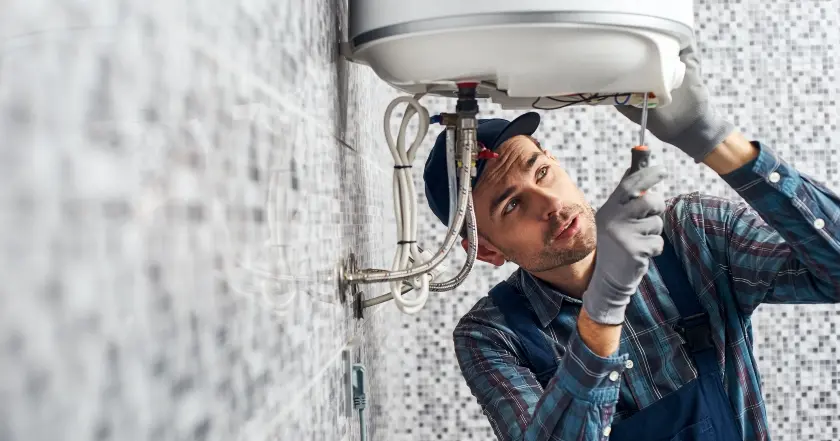
A boiler is one of the most efficient ways to heat a home through long winter months. Knowing how to maintain a boiler protects that efficiency and helps you avoid a sudden mid-winter breakdown.
Some maintenance tasks of heating systems are suitable for homeowners, such as checking pressure and looking for leaks. But sometimes it can be challenging to diagnose a problem on your own.
Gas, electrical, combustion, and internal boiler repairs require a qualified professional. This guide covers five maintenance steps, explains when to call a trained technician, and looks at how a home warranty fits into the picture.
Yes, your boiler requires at least annual maintenance from a qualified technician. Boilers work hardest during the coldest months, and that strain adds up over a full heating season. Maintaining a boiler means recognizing both the safety risks and cost risks tied to neglect.
It also protects against carbon monoxide leaks, which can develop when vents or heat exchangers go unchecked for too long. Heating equipment ranks among the top contributors, and annual inspections catch these hazards before they turn dangerous.
In colder regions where boilers work harder through long winters, like East Providence, regular upkeep becomes even more important. Many homeowners also rely on a home warranty in East Providence to stay prepared for unexpected heating system repairs.
Learning boiler maintenance starts with a simple visual inspection homeowners can do themselves, followed by tasks better left to a trained technician. Here is what each step covers and why it matters.
1. Check for Leaking Water
Look closely at the heat exchanger, since it is one of the most common sources of leaks in an aging boiler. The vent and chimney also tend to break down first, so scan these parts for small holes or rust spots. A leak left unaddressed can damage surrounding components and lead to a much larger repair bill.
2. Monitor Temperature and Pressure Readings
Most residential boilers need between 1 and 2 pressure bars to keep circulation moving properly between radiators. Pressure should never climb above 30 psi under normal operating conditions. A gauge that consistently reads outside this range usually points to a valve, expansion tank, or sensor issue needing attention.
3. Listen for Unusual Noises or Vibrations
Banging, rattling, or humming sounds often mean water flow is restricted or the system is overheating. These noises typically come from trapped air, sediment buildup, or an early pump failure. Catching the sound early gives a technician more repair options and fewer full replacement scenarios.
4. Clean the Heat Exchanger
Mineral deposits build up inside the heat exchanger over time and reduce how efficiently it transfers heat. Cleaning it requires disassembly, and several internal parts are delicate enough that professional handling is strongly recommended. The U.S. Department of Energy notes that regular cleaning of boiler surfaces and consistent water level checks help preserve efficiency and prevent early wear. Skipping this step is one of the fastest ways to shorten a boiler’s lifespan.
5. Flush the Boiler to Remove Rust and Sediment
Flushing clears out rust and sediment that build up at the bottom of the tank over years of use. This task should happen at least every five years, though homes with hard water may need it annually. A trained technician typically shuts off water and power, then lets the system cool completely. Radiator vents are opened, and the tank is drained through a connected hose before refilling.
ENERGY STAR data shows a well-maintained gas boiler can reach an annual fuel utilization efficiency rating of 90 percent or higher. Certified models can save around $780 in energy costs over their lifetime. Consistent upkeep is what makes savings like that possible.
If you notice a problem during any of these checks, contact a trained technician right away. Waiting on a small boiler issue often turns it into a larger repair or a full breakdown.
Even with regular maintenance, boiler parts wear out and mechanical failures still happen over time. A home warranty plan can help cover the repair or replacement costs for major components like heat exchangers, pumps, and pressure switches.
Get a Free Quote
Yes, a boiler is a complex system, and repairs to parts like the heat exchanger, thermostat, or circulator pump can run into thousands of dollars. With home warranty coverage, your provider may help cover repair or replacement costs when a covered breakdown results from normal wear and tear. Instead of paying full price for a sudden boiler breakdown, homeowners with a warranty typically pay a smaller service fee. The plan covers the rest of the qualifying repair cost.
This type of coverage works differently from homeowners insurance, which usually pays out only after a sudden event like a fire or storm. A home warranty instead addresses the gradual, mechanical failures that come from age and daily use, which is exactly how most boiler problems develop. For homeowners who prefer predictable costs over surprise repair bills, a warranty plan can make boiler ownership considerably easier to manage.

Knowing how to maintain a boiler helps you spot early warning signs before a small issue becomes a costly heating problem. Checking pressure, watching for leaks, listening for unusual sounds, and arranging professional servicing can support dependable performance throughout the heating season.
However, regular maintenance cannot prevent every breakdown. When a covered boiler component fails because of normal wear and tear, a home systems warranty may help with eligible repair or replacement costs. Select Home Warranty offers coverage options that can help homeowners prepare for these unexpected expenses.
Before winter arrives, take a few minutes to check your boiler and review your coverage. A little preparation today can help you stay better prepared for heating repairs later.
How do you maintain a boiler between annual services?
Check for leaks, monitor pressure gauges monthly, and keep the area around the boiler clear of clutter and debris.
What is the average lifespan of a home boiler?
A well-maintained residential boiler typically lasts up to 15 years, depending on usage and local water quality.
Can I flush my boiler myself?
Flushing involves shutting off water and power safely, so most homeowners hire a trained technician to avoid damage or injury.
What are the signs my boiler needs repair instead of replacement?
Unusual noises, pressure fluctuations, and minor leaks often point to a repairable issue rather than full replacement.
Does a home warranty cover boiler maintenance or only repairs?
No, home warranties typically cover repair and replacement of failed components, not routine maintenance visits like annual servicing.
How long is a boiler supposed to last?
Boilers have a life expectancy of up to 15 years, depending on how heavily they are used and how often they are maintained.

Don’t wait until it’s too late! Check out our current plans and get your free quote.

Home Warranty
Yes, most home warranties include a transferability clause that allows the seller to assign the remaining coverage to the new owner. The coverage does not disappear the moment the keys..
Household Tips
Your freezer is one of the best ways to preserve food. Of course, when it won’t freeze – well, that’s a big problem! A freezer that stopped working properly causes..

Household Tips
Weekly chores are difficult enough. When the dryer stops spinning, drying the laundry becomes a whole different task, stealing your attention away from more important home duties. Unfortunately, issues with..