

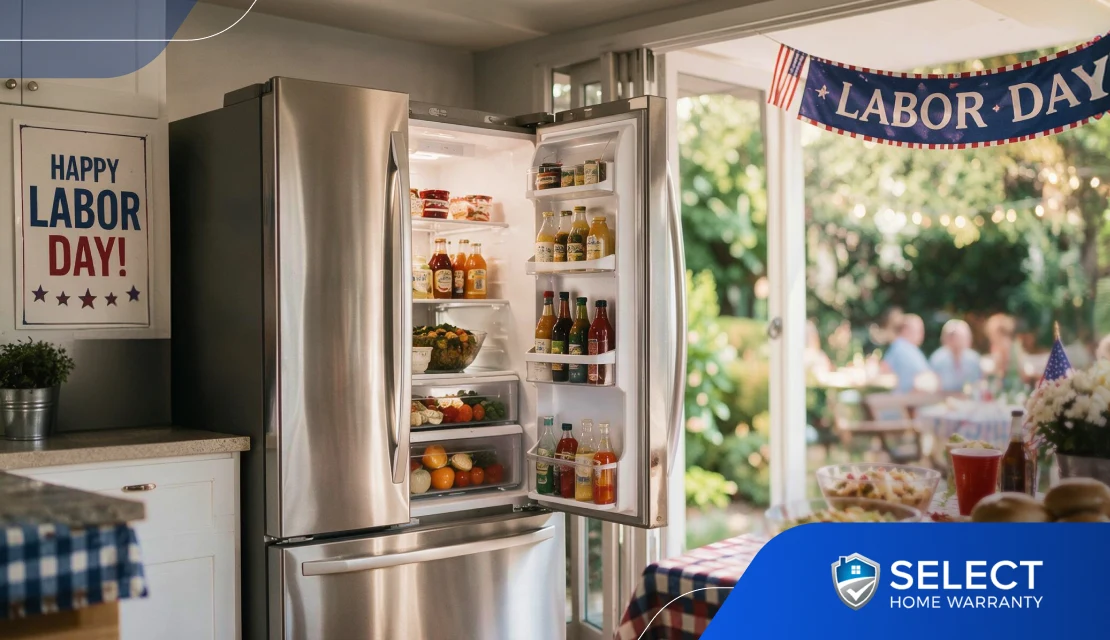
Labor Day weekend means backyard cookout, cooler full of drinks, a packed refrigerator, and a busy kitchen. It also brings a noticeable shift in appliance failure patterns.
Select Home Warranty’s 2026 appliance claim trends show refrigerator failures reaching 1.43x the normal Aug/Sep seasonal baseline on Labor Day. Stove and oven failures also reached 1.39x the baseline.
The refrigerator signal is the stronger deviation. That makes practical sense when food, drinks, leftovers, and ingredients fill every available shelf. A refrigerator problem during a holiday gathering can quickly become more than an appliance inconvenience. Food can spoil, drinks may not stay cold, and guests still need to be fed.
A quick inspection before the holiday can help identify problems early. This blog breaks down what drives the spike, what a fast pre-holiday check should cover, and where home warranty appliance coverage fits before the weekend starts.
Labor Day sits at the center of cookout season, and kitchens feel it directly. Refrigerators hold extra food, drinks, and holiday leftovers for days before and after the event. Frequent door opening creates another challenge. Doors open and close far more often as guests grab ingredients and drinks throughout the day. Every open door lets cold air escape and forces the compressor to work longer to recover.
A refrigerator has to remove heat from everything you place inside. Adding large amounts of warm food can temporarily increase its workload. A crowded refrigerator can create another issue. Blocking internal vents can restrict cold-air circulation between compartments. Heat can add another layer of stress.
That pattern supports a simple takeaway. Refrigeration equipment can face greater demands during periods of heavier use and higher temperatures.
Your refrigerator may provide clues before a complete failure. Watch for:
These symptoms do not automatically mean the refrigerator needs replacement. Some problems involve simple maintenance, airflow restrictions, or worn components. For a deeper look at warning signs, read our guide to signs your refrigerator is dying.

Stove and oven failures track a similar pattern, sitting at 1.39 times baseline as ovens run for hours to handle grilling backups and side dishes. Together, refrigerator and oven/stove categories represent the sharpest seasonal deviation in our appliance and systems index.
Labor Day cooking can put your oven under heavier-than-usual demand. More meals, longer cooking times, and repeated use can expose existing problems. So, give your oven a quick check before the holiday cooking begins.
Your oven may show several signs before a complete breakdown. Watch for:
Some problems may have simple causes. Food debris can affect burner performance, while a damaged door seal can allow heat to escape. Other problems may involve components such as heating elements, igniters, temperature sensors, or control boards. These issues may require professional diagnosis and repair.
If you notice a problem, check out our guide to oven troubleshooting and repair, covering common oven issues and possible troubleshooting steps.
You do not need a toolbox for a basic pre-holiday inspection. You need about ten minutes and a few simple checks.
Use an appliance thermometer to check the refrigerator compartment. The FDA recommends keeping refrigerators at 40°F or below for food safety. If your refrigerator is warmer than expected, avoid assuming the setting is the only problem. Check airflow, door closure, and unusual operating sounds.
Close the door and examine the rubber seal around its edges. Look for cracks, gaps, hardened sections, or areas that no longer make proper contact. A weak seal allows cold air to escape. The refrigerator may then run longer while struggling to maintain its temperature.

Look for food containers blocking interior vents. Rearranging crowded shelves can improve air circulation. Avoid packing the refrigerator so tightly that cold air cannot move between compartments.
Dust and debris can collect around the rear and underneath the appliance. If your refrigerator design allows access, clean visible dust according to the manufacturer’s instructions. Keep adequate clearance around the appliance. Do not remove panels or attempt electrical repairs unless you are qualified.
A refrigerator normally produces operating sounds. New grinding, scraping, knocking, or repeated clicking deserves attention. A sudden change in sound can indicate a component problem.
Look around the refrigerator and underneath it for standing water. Water can come from several sources, including drain problems, water lines, filters, or internal components. Persistent leaks need further inspection.
Turn the oven on before the holiday meal. Confirm that it heats normally and reaches the selected temperature. Check the cooktop burners as well. A burner that takes unusually long to heat deserves attention before you begin cooking for guests.
A refrigerator failure can spoil food and disrupt your holiday plans. A home warranty plan may help with eligible appliance breakdowns caused by normal wear and tear.
Home warranties are designed to protect your appliances from exactly this kind of seasonal strain. A typical warranty plan pairs the refrigerator, oven, and other kitchen appliances under one agreement. When a covered appliance breaks down, you can submit a claim rather than calling around to repair professionals for quotes and service during a busy Labor Day weekend.
Once a claim is reviewed, a trained technician is scheduled to diagnose and repair the appliance. This structure matters most during high-demand periods like Labor Day, when independent repair companies are booked solid. Home appliance warranty exists to absorb that kind of timing problem, not just routine wear over the year. When comparing appliance warranty plans, look beyond the monthly price. Check covered appliances, service fees, coverage limits, exclusions, and contract requirements.
But this doesn’t mean a protection plan replaces basic maintenance. Proper maintenance can help you spot issues early and understand potential coverage requirements. Coverage generally applies to mechanical breakdowns from normal wear, not damage from misuse or a prior known issue.
You can also explore Select Home Warranty plans to review available appliance and system coverage options.
Yes, a warranty may cover eligible refrigerator repairs caused by normal wear and tear. Home warranty refrigerator coverage depends on your specific plan and contract terms.
The FDA recommends keeping your refrigerator at 40°F or below. Use an appliance thermometer to verify the actual temperature.
Appliance coverage can include major kitchen and laundry appliances, such as clothes dryers, clothes washers, cooktops, dishwashers, garbage disposals, built-in microwave ovens, refrigerators, and stoves/ovens. Coverage depends on the provider and plan, with coverage limits, exclusions, and service fees applying to eligible repairs or replacements.
Consider the refrigerator’s age, repair cost, frequency of breakdowns, and replacement price. Repeated expensive repairs may support replacement. In most cases, a common rule of thumb is the 50% rule: if a repair costs more than 50% of the price of a comparable new refrigerator, replacement may be the better option.
Slow preheating can result from a failing heating element, igniter, temperature sensor, or other component. If the problem continues after basic checks, professional troubleshooting may be necessary.

Don’t wait until it’s too late! Check out our current plans and get your free quote.

Household Tips
If you own your home, repairs are inevitable. Fortunately, while not everyone’s suited to handywork, there are plenty of common home repairs you can do yourself. This list includes some..
Household Tips
Having an at-home washing machine and clothes dryer is an incredible convenience. It sure beats going to the laundromat! Of course, with homeownership comes routine maintenance. If you want to..
Household Tips
If you’re tired of dealing with rotting food and excess waste, a garbage disposal is perfect for your kitchen. A garbage disposal is an easy-to-use appliance that will save time..